
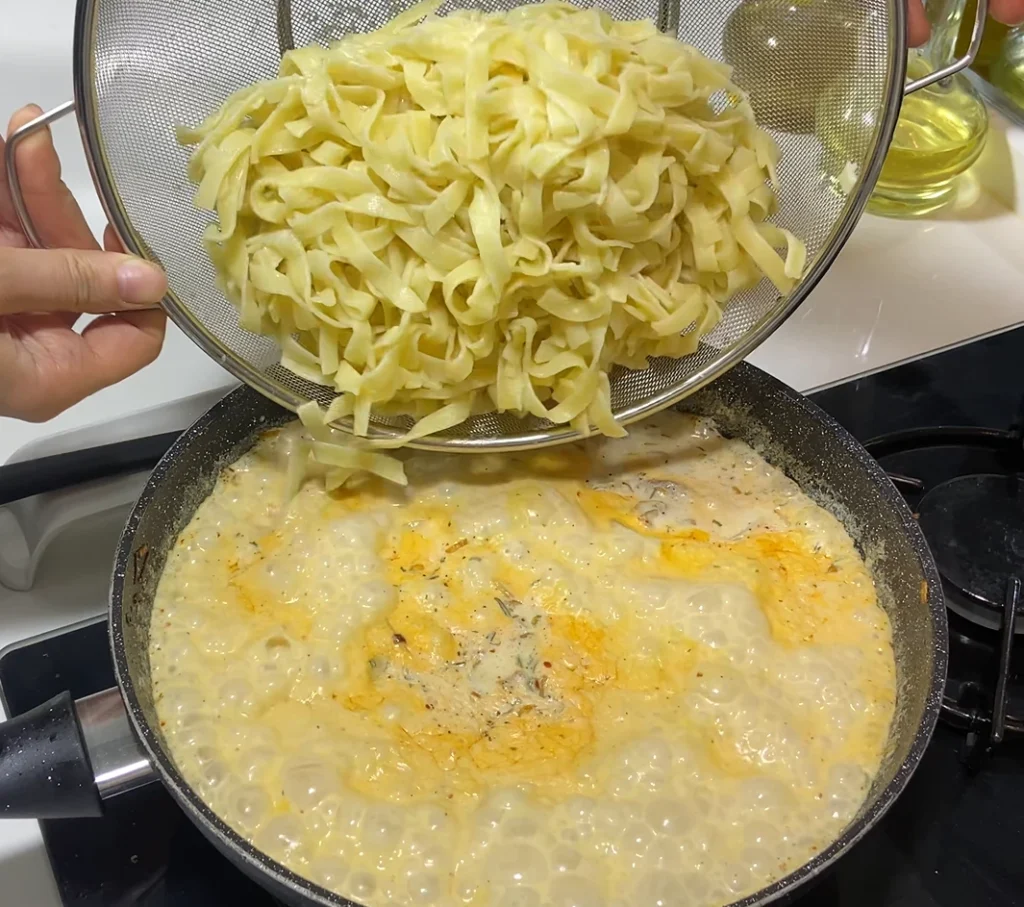
How to Finish Pasta in the Sauce
Instead of boiling the pasta completely and pouring sauce over it, remove it from the water about 1–2 minutes before the package time and finish cooking it in the hot sauce. Add the starchy pasta water gradually and toss for 60–90 seconds to help the sauce cling to the pasta.
Quick Answer
Finishing pasta in the sauce means completing the last part of cooking in the sauce skillet, bringing the pasta, starchy water, and sauce together into one cohesive consistency. This technique is especially useful with tomato-based, oil-based, and many cheese sauces, helping the sauce cling to the pasta’s surface rather than simply sitting on top. The key points are to remove the pasta slightly early, save the pasta water, and bring the sauce together gradually.
In This Guide
Key Reasons
-
Pasta cooking water contains starch released from the pasta’s surface. This starchy water helps the fat and water in the sauce combine more evenly. Rather than leaving fully cooked pasta to sit after draining, transfer it while still slightly firm directly to the sauce skillet so the sauce can meld with the pasta during the final minutes.
-
High heat can cause a sauce to split when it is finished with cheese or butter. For some sauces made with hard cheeses such as Parmesan, it is therefore more controlled to complete the final emulsion with the heat off.
Proper Application
- Have the sauce ready in a wide skillet before or while the pasta cooks.
- Boil the pasta in plenty of salted water, and reserve at least 1 cup of starchy pasta water before draining.
- Remove the pasta about 1–2 minutes before the recommended package time, while the center is still slightly firm.
- Transfer the pasta directly to the hot sauce skillet.
- Start with about 30–60 ml of pasta water and cook over medium heat for 60–90 seconds, tossing constantly.
- If the sauce becomes too thick, loosen it with 1–2 tablespoons of pasta water; if water collects at the bottom, toss for a little longer.
- If finishing with butter or cheese, remove the skillet from the heat as directed by the recipe and quickly stir in the final ingredients to create a glossy, fluid sauce.
- Serve when the sauce coats the pasta in a thin, glossy layer without forming a separate pool of water at the bottom of the plate.
Common Mistakes
Fully cooking the pasta before adding it to the sauce
Why it causes problems: The extra time in the sauce can make the pasta too soft.
Correct use: Remove the pasta about 1–2 minutes early and finish cooking it in the sauce.
Discarding all the pasta water
Why it causes problems: You lose the starchy liquid that can adjust the sauce’s consistency and support the emulsion.
Correct use: Reserve at least 1 cup of pasta water before draining.
Washing the pasta
Why it causes problems: The surface starch is removed, making it harder for the hot sauce to cling to the pasta.
Correct use: Do not rinse pasta that will be served hot after draining it.
Adding too much pasta water all at once
Why it causes problems: The sauce becomes too watery, and the pasta may sit in a watery dish.
Correct use: Start with 30–60 ml and add more gradually as needed for the consistency.
Adding cheese over very high heat
Why it causes problems: The cheese proteins can tighten, causing the sauce to become lumpy or separate into fat.
Correct use: If needed, finish binding the cheese sauce with the heat off.
Mayana's Recommendation
For 60–90 seconds in the sauce skillet, do not merely stir the pasta; shake the skillet or turn the pasta regularly with tongs. The aim is to turn the starchy water, fat, and sauce into a thin emulsion around the pasta.
Additional Information
Heat control matters more with creamy and heavily cheese-based sauces. With seafood sauces or sauces containing very delicate ingredients, the time spent finishing the pasta in the sauce can be shorter. Fresh pasta cooks faster than dried pasta, so the 1–2-minute early-removal rule may not apply exactly.
Frequently Asked Questions
How long should pasta cook in the sauce?
For dried pasta, spending the final 60–90 seconds in the sauce is generally a good starting point. Removing the pasta about 1–2 minutes before the package time helps prevent overcooking.
How much pasta water should you add to the sauce?
Start with about 30–60 ml. Add another 1–2 tablespoons gradually, adjusting to the sauce’s consistency.
Should pasta be rinsed when finishing it in the sauce?
No. Rinsing hot pasta removes surface starch and can make it harder for the sauce to cling.
When should the cheese be added?
If the pan is too hot when making a cheese sauce, the cheese may become lumpy. For better control, add the cheese after removing the pan from the heat, as directed in the recipe, and whisk it in quickly.
More Cooking Information from the Cooking Techniques Category
Access the other explanations, tips, and practical information published in the Cooking Techniques section from a single screen.