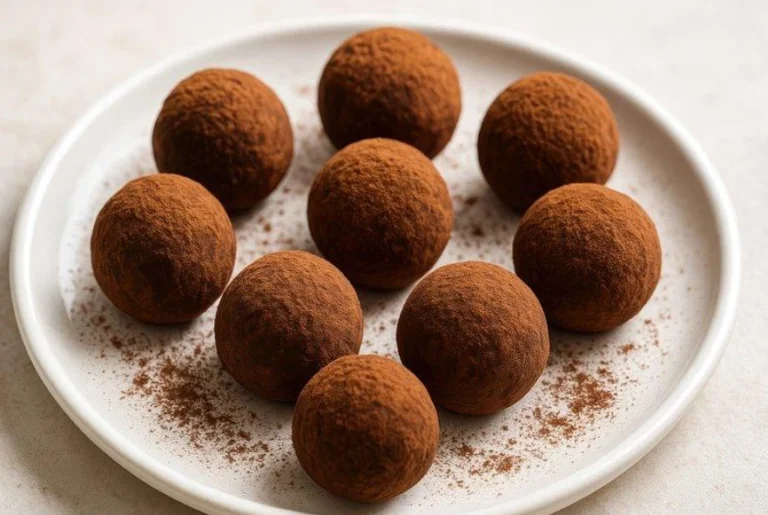
Malaga Pasta: A Recipe with Bananas
Soft cocoa cake, banana cream, and glossy ganache come together in neat, chilled layers.
Keep Every Layer Cool
Let the cocoa cake and pastry cream cool completely before assembly. Drizzle the milk over the cooled cake, add whipped topping only after the cream reaches room temperature, and use firm, underripe bananas. The ganache should be pourable but lukewarm, then the assembled cake needs at least 4 hours in the refrigerator before slicing.
- Yield
- 10 rectangular slices
- Servings
- 10 servings
- Total time
- 1 hr 20 min
- Difficulty
- Medium
- Prep time
- 45 min
- Cook time
- 35 minChilling and Refrigerated Resting: At least 4 hr 30 min, ideally 5 hr 30 min
Ingredients for Malaga Pasta
For the cocoa cake
For the cream
For soaking the cake
For the banana layer
For the ganache
For decorating
How to Make Malaga Pasta
Enlarges the steps and, on supported browsers, helps keep your screen awake.
-
01
Prepare the pan and oven
5 minutesLightly grease the bottom and sides of an approximately 35 x 25 cm rectangular glass baking dish. Preheat the oven to 180°C with top and bottom heat. Bring the eggs, milk and other chilled ingredients close to room temperature before using them.
-
02
Whisk the cake batter
8 minutesWhisk the eggs and granulated sugar for 4–5 minutes, until pale, voluminous and foamy. Add the oil and milk, then mix briefly on low speed. Sift the flour, cocoa, baking powder and vanilla together, then add them to the mixture. Mix with a spatula or on the lowest mixer speed only until no dry flour remains.
-
03
Bake the cake evenly
20–25 minutesPour the batter into the prepared Borcam dish and smooth the surface. Tap the dish lightly on the counter once. Bake on the middle rack of a preheated 180°C conventional oven for 20–25 minutes. Do not open the oven door for the first 18 minutes. Let the baked cake cool completely in the dish.
-
04
Cook the pastry cream
10–12 minutesAdd the milk, granulated sugar, starch and flour to a saucepan. With the heat off, whisk until smooth. Cook over medium heat, stirring constantly and scraping the bottom of the pan. When the cream thickens and the first bubbles appear, cook for 1 minute more. Remove from the heat, add the butter and stir until melted.
-
05
Add the whipped topping to the cream
4–5 minutesTransfer the cooked cream to a wide bowl and press plastic wrap directly onto its surface. Cool until it reaches room temperature; no warmth should remain. Remove the plastic wrap, add the powdered whipped topping and beat with a mixer for 4–5 minutes. Refrigerate the cream until assembly.
-
06
Moisten the cake with milk
3 minutesMake sparse holes in the surface of the completely cooled cake with a toothpick. Slowly drizzle one tea glass of milk over the entire surface without pouring it in one spot. Wait 5 minutes for the cake to absorb the milk.
-
07
Spread the cream and arrange the bananas
10 minutesSpread the cold cream over the moistened cake in an even layer with a spatula. Peel the bananas only when you are ready to use them. Halve five large bananas lengthwise and arrange them in two rows, cut side down against the cream. Keep the gaps between the bananas even according to the slicing plan.
-
08
Make the chocolate ganache
5 minutesHeat the heavy cream in a small saucepan until you see the first wisps of steam and tiny bubbles around the edges; do not boil it. Remove from the heat and add the finely chopped milk and dark chocolate mixture. Let it sit undisturbed for 1 minute, then stir from the center outward until smooth and glossy. Let the ganache cool for 8–10 minutes.
-
09
Pour over the ganache and let it set
4–5 hoursSlowly pour the lukewarm ganache over the bananas, covering the entire surface with a thin, even layer. Cover the cake and refrigerate it. Let it rest for at least 4 hours, ideally 5 hours. Just before serving, garnish with ground pistachios and coarsely chopped hazelnuts. Cut into 10 rectangular slices, following the lines of the bananas.
Malaga Pasta
Follow every step that creates neat layers, from the cocoa cake and cream to arranging the bananas and pouring the lukewarm ganache.
Mastery Guide
Review the technical details, common mistakes and correct practices that determine the recipe result.
Critical Tips
Add the Whipped Topping to the Cold Cream
Hot pudding can damage the whipped topping's structure, causing the cream to loosen and look greasy.
Best practice: Cool the pudding completely with its surface covered, then add the whipped topping and beat for 4–5 minutes.
Cut the Bananas at the Last Minute
Cut bananas darken when exposed to air and may release liquid while they sit.
Best practice: Peel and cut the bananas after spreading the cream, then cover them with ganache shortly afterward.
Pour the Ganache While Lukewarm
Ganache that is too hot will melt the cream and cause it to sink around the bananas; ganache that is too cool will not spread evenly over the surface.
Best practice: Let the ganache sit for approximately 8–10 minutes after making it, then use it while it is pourable but lukewarm.
Do Not Overbake the Cake
The thin cocoa base dries out quickly at high heat or after too long in the oven; it may remain tough even when moistened with milk.
Best practice: At 180°C, check the cake with a toothpick after the 20-minute mark and continue baking carefully.
Cool Completely Before Cutting
If you cut the slices before the ganache and cream have set firmly enough, the layers will slide.
Best practice: Let the cake rest in the refrigerator for at least 4 hours. Use a knife warmed slightly with hot water and dried, rather than a cold knife.
Common Mistakes
Underwhipping the Eggs and Sugar
A cake mixture that has not gained enough air will produce a thin, dense, heavy base.
Best practice: Whisk the mixture for 4–5 minutes, until it is pale and has increased in volume.
Overwhisking After Adding the Flour
Overmixing strengthens the gluten that develops, making the cake tough.
Best practice: Sift the dry ingredients, then mix on low speed only until combined.
Pouring Milk Over a Hot Cake
A hot cake may absorb the milk unevenly, creating doughy areas at the base.
Best practice: Once the cake has cooled completely, distribute the milk gradually over the entire surface.
Using Overripe Bananas
Soft bananas get crushed when sliced, release water onto the cream, and cause the cake to spoil faster.
Best practice: Choose firm bananas with yellow skins and few or no spots.
Making Ganache with Boiling Cream
Excessively hot cream can cause the chocolate's fat to separate, producing a dull, grainy ganache.
Best practice: Remove the cream from the heat before it reaches a boil, then add it to the chocolate.
Why Does This Happen?
Why Does Whipped Topping Lighten the Cream?
Whipped topping beaten into cold pudding adds air to the mixture and softens the consistency created by the flour and starch.
Best practice: Once the pudding has cooled completely, whip it at high speed, watching the consistency.
Why Does Milk Keep the Cake More Moist?
Milk spreads through the cold cake's pores, softening the dry cocoa base and helping it meld with the cream layer.
Best practice: Use the measured amount of milk and drizzle it evenly over the entire surface.
Why Use Milk and Dark Chocolate Together?
Milk chocolate adds sweetness and softness, while dark chocolate provides deeper cocoa flavor and a more balanced structure.
Best practice: Mix the total 140 g of chocolate in roughly equal amounts, according to your taste.
Why Do Bananas Brown More Slowly Under Ganache?
Ganache reduces the banana’s exposure to air, but it does not stop browning completely.
Best practice: Arrange the bananas on the cake as soon as you slice them, then cover them with ganache shortly afterward.
Why Does Chilling Firm Up the Slices?
As the cocoa butter in the ganache and the fats in the cream firm up in the cold, the moisture between the cake and cream balances out.
Best practice: Do not cut the cake for serving until it has rested for at least 4 hours.
Mayana Tips
Slice the Cake Between the Bananas
Cutting randomly can crush the bananas and cause the layers to shift.
Best practice: Arrange the bananas at the start with enough space to create 10 portions, then cut between them.
Cool the Cream in a Wide Container
Pastry cream left in a deep pot stays hot in the center for a long time.
Best practice: Transfer the cream to a wide container so it cools quickly and evenly.
Stir the Ganache from the Center
Fast, wide strokes can incorporate unnecessary air into the mixture and create bubbles on the surface.
Best practice: Start in the center and stir outward in small circles.
Decorate Close to Serving Time
Nuts can soften in the moisture of the refrigerator and their color can become dull.
Best practice: Sprinkle on the pistachios and hazelnuts just before slicing.
Wipe the Knife for Clean Slices
When ganache and cream build up on the knife, they dirty the edges of the next slices.
Best practice: Wipe the knife after each cut and warm it slightly again.
Ingredients & Measurements
Measure Flour by Weight, Not by Cup
Packed or heaped flour can make the cake dry and dense.
Best practice: Measure 1.5 cups of flour as approximately 180 g.
Measure the Cocoa Consistently
The difference between two and three tablespoons changes the liquid-to-dry ratio and the chocolate flavor.
Best practice: Use three level tablespoons, or approximately 21 g, of cocoa.
Choose Bananas of Similar Length
Very short or unevenly sized bananas throw off the portions and appearance.
Best practice: Choose five large bananas of similar size and cut them in half lengthwise.
Chop the Chocolate Finely
Large pieces may not melt completely before the hot cream cools.
Best practice: Break the milk and dark chocolate into small, similarly sized pieces.
Weigh the Whipped Cream Mix
Packet weights can vary by brand, and too much whipped cream mix can make the cream heavy.
Best practice: Use approximately 75 g of whipped cream mix.
Cooking Techniques
Preserve the Egg Foam
The cake's volume depends largely on the air bubbles formed while beating the eggs and sugar.
Best practice: Mix the liquids briefly, then use low speed after adding the flour.
Stir the Cream Constantly from the Bottom
The flour and starch can quickly thicken and become lumpy on the bottom of the pan.
Best practice: Keep the whisk moving continuously, making sure it touches the sides and bottom.
Cool the Custard with Plastic Wrap Touching the Surface
A thick skin forms on custard that cools uncovered, leaving small pieces when you whisk it.
Best practice: Press plastic wrap directly onto the surface of the cream.
Melt the Chocolate with Residual Heat
Chocolate can split if it is boiled with the cream.
Best practice: Remove the cream from the heat, add the chocolate, and let it stand for 1 minute.
Cut the Cake Chilled
Warm ganache and loose cream run to the side under the pressure of the knife.
Best practice: Chill the cake for at least 4 hours, then cut it with quick, straight movements.
How to Store and Make Malaga Pasta Ahead
- Serving temperature
Serve cold, within 10–15 minutes of taking it out of the refrigerator.
- Best resting time
Chill in the refrigerator for at least 4 hours, ideally 5 hours.
- Refrigerator storage
Store covered in the refrigerator for 2–3 days. The bananas may darken and release moisture as they sit, so the texture is best within the first 24 hours.
- Room-temperature limit
Because it contains a milk-based cream and ganache, do not leave it at room temperature for more than 2 hours or in a hot environment for more than 1 hour.
- Freezing
Freezing is not recommended because the banana and whipped-topping cream may release water and lose their texture when thawed.
- Make-ahead steps
The cocoa cake and pastry cream can be prepared 1 day ahead. Assemble the whipped topping, banana and ganache layers at least 4–5 hours before serving.
- Serving suggestion
Serve the slices plain; if desired, add a small amount of ground pistachios or coarsely chopped hazelnuts to the plate.
Nutrition
1 serving: 1 rectangular slice; including serving additions
The calculation is based on 10 equal rectangular slices. Standard conversions for eggs, milk, flour, sugar, vegetable oil, cocoa, bananas, milk-and-dark chocolate, cream, whipped topping and nuts, along with manufacturer labels and USDA-based averages, were used. The actual weight of the bananas and the brand of whipped topping and chocolate may change the per-serving values. Values are approximate calculations.
Frequently Asked Questions About Malaga Pasta
How many hours should Malaga cake rest?
Let it rest in the refrigerator for at least 4 hours, ideally 5 hours, so the layers can set and the ganache can reach a sliceable consistency.
Why do the bananas in Malaga cake turn brown?
Cut bananas turn brown as they come into contact with air. Using firm bananas, cutting them at the last minute, and covering them with ganache soon after slows the process.
Should ganache be poured hot over the cream?
No. Hot ganache can melt the cream. Pour it over the bananas once it has cooled to a lukewarm consistency that is still pourable.
At what temperature is Malaga cake baked?
Bake it in an approximately 35 x 25 cm pan at 180°C in a preheated oven with both top and bottom heat for 20–25 minutes, watching it closely.
Can whipped cream be added to hot pudding?
It should not be added. Once the pudding has cooled completely, add the powdered whipped cream and beat with a mixer for 4–5 minutes.
Can Malaga cake be made a day ahead?
Yes. You can prepare it a day ahead and store it covered in the refrigerator, but because it contains bananas, it looks and tastes best within the first 24 hours.
You may also like