
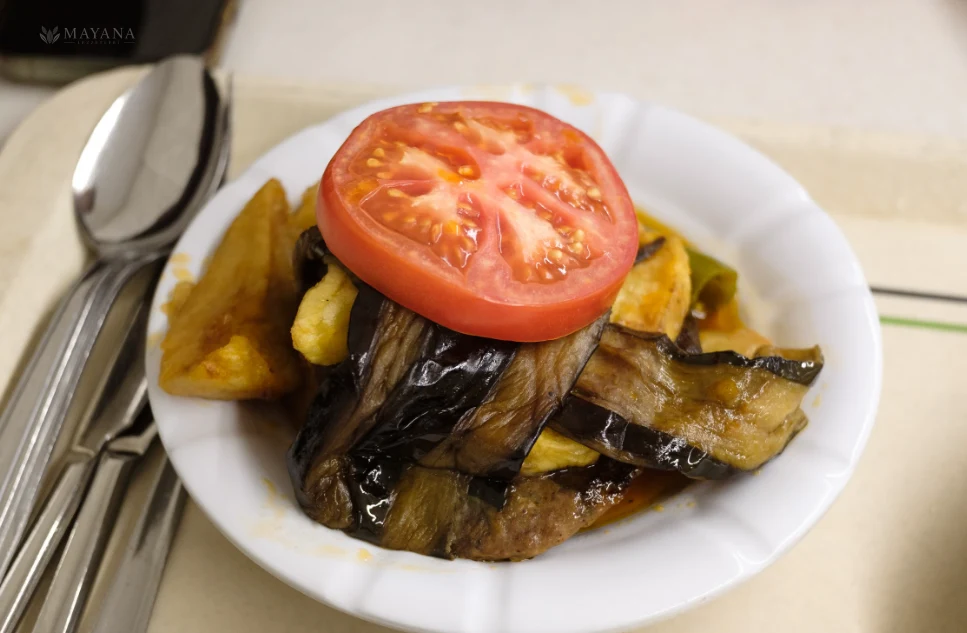
How to Fry Eggplant Without Absorbing Oil
To prevent eggplant from absorbing too much oil while frying, dry the surface thoroughly, keep the oil at around 175–180 °C, avoid overcrowding the pan, and do not extend the cooking time.
Quick Answer
To keep eggplant from absorbing too much oil while frying, dry the slices thoroughly before frying and heat the oil to about 175–180 °C. Fry the eggplant in small batches without crowding the pan, cooking only until tender and browned. Salting or briefly soaking in salted water may help, but leaving no water on the surface afterward is more important for reducing oil absorption and splattering.
In This Guide
Key Reasons
- Surface moisture: If eggplant removed from water is not dried thoroughly, it can suddenly lower the oil temperature. This delays browning and requires a longer frying time.
- Low oil temperature: Frying at a low temperature instead of around 175–180 °C can lead to prolonged contact with the oil rather than quick surface browning.
- Overcrowding the pan: Adding too much cold eggplant at once lowers the oil temperature. When the pieces touch, the steam they release also makes it harder for the surface to brown quickly.
- Cutting it too thin: Slices that are thinner than necessary increase the total surface area and can dry out easily, taking on a greasy texture. For classic fried eggplant, a thickness of about 1.5–2 cm is more manageable for most uses.
- Frying for too long: If the eggplant remains in the oil after it has browned and softened inside, the surface darkens and the result becomes heavier.
Proper Application
- Cut the eggplant into even pieces: Use pieces that are as similar in size as possible when preparing rounds, long slices, or large cubes. For rounds and long slices, a thickness of about 1.5–2 cm is a good starting point.
- Salt if desired: You can lightly salt both sides of the slices and leave them for 20–30 minutes. Then briefly remove the excess salt from the surface. If you prefer to soak them in salted water, 15–20 minutes is enough.
- Dry thoroughly: Dry the eggplant’s surface completely with a clean kitchen towel or paper towel. Just before it goes into the oil, there should be no visible droplets of water on the surface.
- Heat the oil to 175–180 °C: A thermometer is the most reliable method. Without one, drop a small piece of eggplant into the oil; regular bubbles should form around it immediately, and the oil should not be smoking.
- Fry in small batches: Leave space between the pieces in the pan. Wait for the oil to return to temperature before adding the next batch.
- Cook only as long as needed: Slices about 1.5–2 cm thick usually brown and soften in 3–5 minutes total on most stovetops; adjust the time according to their color and texture.
- Drain as you remove them: Remove the eggplant with a slotted spoon and let it drain over the pot for a few seconds. Then transfer it to a wire rack or briefly place it on paper towel. This does not draw out oil absorbed inside, but it reduces the free oil left on the surface.
Common Mistakes
Putting wet eggplant directly into the oil
Why it causes problems: Water on the surface lowers the oil temperature, delays browning, and can cause dangerous splattering.
Correct use: Dry the eggplant completely after soaking in salted water or washing it.
Starting to fry before the oil is hot enough
Why it causes problems: At a low temperature, the surface browns slowly and the eggplant remains in contact with the oil for longer.
Correct use: Heat the oil to about 175–180 °C and wait for it to heat back up between batches.
Overfilling the pan with eggplant
Why it causes problems: Adding too much at once lowers the oil temperature and causes the pieces to remain surrounded by steam.
Correct use: Fry the eggplant in small batches, arranged in a single layer with space between the pieces.
Cutting the eggplant too thin
Why it causes problems: This increases the surface area; the slices can dry out quickly and become greasy.
Correct use: Prepare even slices, usually around 1.5–2 cm thick, according to how you plan to use them.
Adding vinegar, water, or similar liquids to the oil
Why it causes problems: This is not a reliable primary method for controlling oil absorption, and water-based liquids can cause hot oil to splatter.
Correct use: Control the oil temperature, the dryness of the eggplant, and the batch size; do not add the liquid to the frying oil.
Letting fried eggplant sit in the oil
Why it causes problems: Continuing to cook after it has browned can make the texture heavy and darken the surface too much.
Correct use: Remove and drain it as soon as the inside is tender and the outside is golden brown.
Mayana's Recommendation
Mayana tip: Dry the eggplant during the preparation stage, not right before frying; its surface must be dull and completely dry when it goes into the oil. Check the temperature during the first batch and find the right stovetop setting, then keep the same setup for the remaining batches. If you are preparing a large amount of eggplant, frying it in small batches is a more effective way to control the process than increasing the amount of oil.
Additional Information
Is salting necessary? With fresh, modern eggplant varieties, it is not always necessary to remove bitterness; for frying, however, it can help draw out excess moisture and firm up the texture. If you salt the eggplant, the most important final step is to dry the surface completely.
A less-greasy alternative: Although the result is somewhat different from the texture of classic frying, cooking eggplant slices with a small amount of oil in the oven or air fryer at high heat significantly reduces the total amount of oil used.
How to tell when it’s done: Well-fried eggplant should be golden brown on the outside and soft and creamy inside; when pressed on the plate, it should not leave a noticeable amount of oil around it.
Frequently Asked Questions
Does soaking eggplant in salted water reduce oil absorption?
Soaking in salted water can help reduce the eggplant’s bitterness and prepare its texture. To reduce oil absorption, the crucial step is to dry the slices completely after removing them from the water, then add them to hot oil.
What temperature should the oil be for frying eggplant?
For home frying, approximately 175–180 °C is a good working range. If the oil is too cool, browning takes longer; oil that is overheated and smoking is unsuitable for flavor, color, and safety.
Why does eggplant soak up oil like a sponge?
Eggplant’s porous interior allows oil to enter those spaces as it loses water during frying. Low heat, a long frying time, and overcrowding the pan can intensify this effect.
Does adding vinegar to the frying oil keep eggplant from absorbing oil?
Adding vinegar to the oil is neither necessary nor a basic method for controlling oil absorption. Because vinegar contains water, it can cause the hot oil to splatter. Instead, Mayana recommends drying the eggplant thoroughly and keeping the oil at the right temperature.
Does eggplant absorb less oil when baked or cooked in an air fryer?
Generally, yes. Baking or air-frying eggplant with a measured amount of oil brushed over the surface uses much less oil than deep-frying. However, the outer coating and inner texture may differ from those of traditionally fried eggplant.
Other Cooking Tips and Techniques
Access the other explanations, tips and practical guidance published in the Cooking Tips and Techniques section from a single screen.