
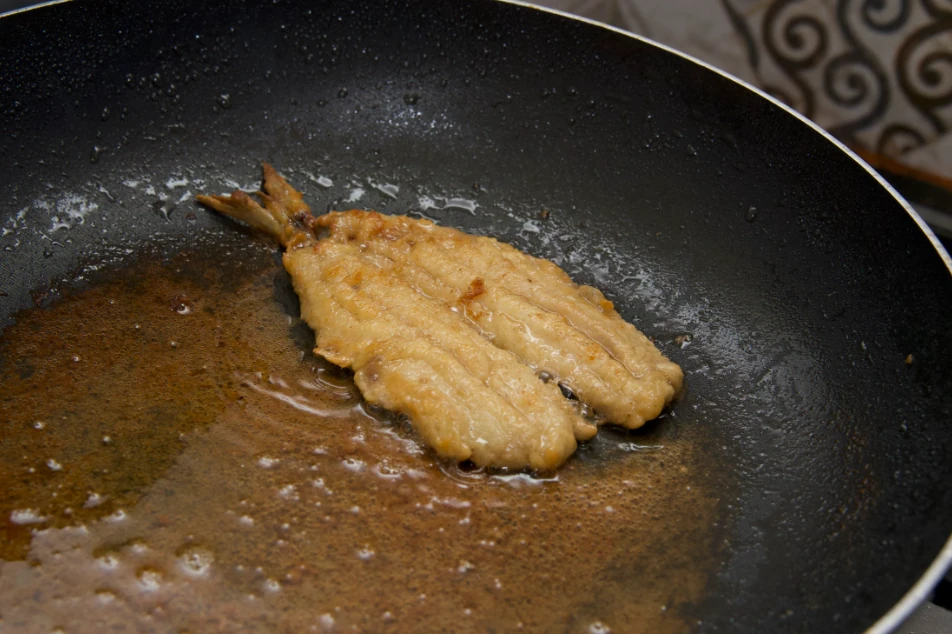
How to Pan-Fry Fish with Crispy Skin
Dry the skin, heat the pan, press the fillet briefly, and turn it at the right time for juicy fish with crispy skin.
Quick Answer
The most important step for crispy fish skin is keeping the surface completely dry. Once the pan and oil are thoroughly hot, place the fish skin-side down, press it with a spatula for the first 20–30 seconds to keep it from curling, and cook most of the way on the skin side. Moving the fish too early can tear the skin and make it stick to the pan.
In This Guide
Key Reasons
-
The water on the surface must evaporate before browning can begin. If the skin is wet, much of the pan’s heat goes toward removing the water, delaying browning. When dry skin meets hot oil and a pan that holds heat well, the surface browns and crisps more quickly.
-
When the fish goes into the pan, the skin can shrink and curl the fillet. Applying light pressure in the first few seconds keeps the whole skin in contact with the pan. Once the skin is browned enough, it will release more easily from the pan.
Proper Application
- Take out the skin-on fish fillet and dry the skin completely with paper towels.
- Season with salt just before cooking. If you salted it well in advance, dry the moisture that has risen to the surface again.
- Heat a stainless-steel or cast-iron pan thoroughly over medium-high heat. Add a thin layer of oil.
- Place the fish in the pan away from you, skin-side down.
- Press gently with a wide spatula for the first 20–30 seconds; release it once the fillet lies flat.
- Without moving the fish, cook about 70–80% of the way on the skin side.
- Turn it and cook the flesh side only briefly, for about 30–90 seconds depending on the thickness.
- For food safety, reach an internal temperature of 62.8 °C in the thickest part.
Common Mistakes
Putting fish with wet skin into the pan
Why it causes problems: The surface steams instead of browning, and the skin does not become crisp.
Correct use: Dry the skin very thoroughly with paper towels.
Putting fish in a cold pan
Why it causes problems: The skin can stick to the pan, and the crisp crust forms slowly.
Correct use: Heat the pan and oil sufficiently in advance.
Moving the fish continuously as soon as it goes into the pan
Why it causes problems: The skin can tear before a crust forms.
Correct use: After the initial pressing, wait for the skin to brown and release itself.
Cooking the fish for equal lengths of time on both sides
Why it causes problems: The flesh side may overcook while the skin does not become crisp enough.
Correct use: Cook most of the cooking time on the skin side.
Mayana's Recommendation
- Mayana tip: With thick salmon or sea bass, be patient and wait until the skin side is almost completely cooked; turning should be only the final touch.
- If you are using sauce, do not pour it over the crispy skin before serving; place the sauce underneath or beside the fish on the plate.
- Cast-iron or thick stainless-steel pans make crisping easier because they hold heat more steadily.
Additional Information
The crispy-skin technique is for fillets with the scales removed and edible skin. The USDA recommends a minimum internal temperature of 62.8 °C for fish prepared at home.
Frequently Asked Questions
Why Doesn’t Fish Skin Get Crispy?
The most common reasons are wet skin, a pan that is not hot enough, or turning the fish too early.
Why Does Fish Stick to the Pan?
A cold pan, too little oil, and moving the fish before a crust forms all increase the risk of sticking.
Which Side of the Fish Goes Down First?
For a skin-on fillet, place the fish skin-side down first and do most of the cooking on that side.
What Is the Safe Internal Temperature for Fish?
The USDA recommends a minimum internal temperature of 62.8 °C for fish prepared at home.
More Cooking Information from the Cooking Techniques Category
Access the other explanations, tips, and practical information published in the Cooking Techniques section from a single screen.