
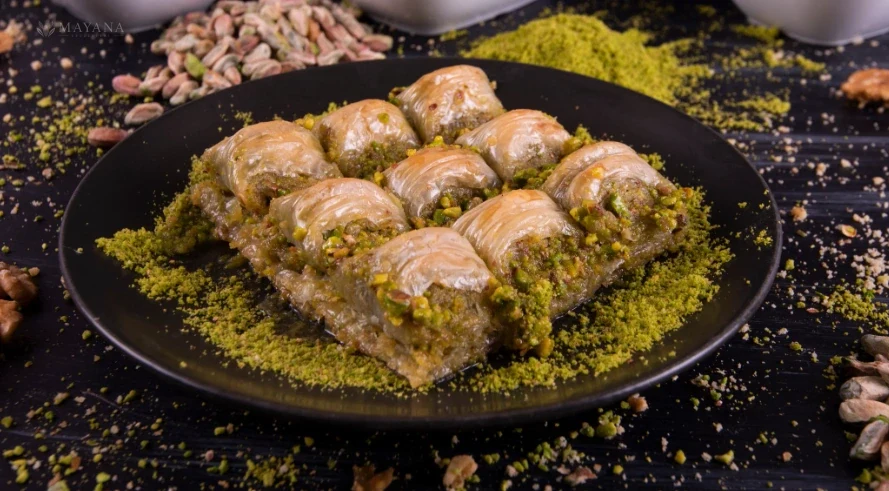
Fundamental Rules for Keeping Syrup-Soaked Desserts Crisp
To preserve crispness in baklava, kadayıf and similar syrup-soaked desserts, combine thorough baking with the right syrup consistency, controlled soaking and moisture management.
Quick Answer
The key to keeping syrup-soaked desserts crisp is not adding more water than the baked layers can absorb. The dessert should be fully baked and dry in texture; the syrup should have the right consistency, be measured carefully and be added at the temperature specified by the recipe. Do not cover the dessert while it is still hot after soaking; let the steam escape.
In This Guide
Key Reasons
- Underbaking: Leaves more moisture than intended in the dessert's inner layers. When syrup is added, these layers become soggy more easily.
- Too much syrup or syrup that is too thin: Adds more water than the dessert can absorb and speeds softening, especially in the bottom layers.
- Uncontrolled temperature: Affects how quickly the syrup penetrates the dessert. Rather than applying one temperature rule to every syrup-soaked dessert, adjust the approach to the structure of the product.
- Covering It While Hot: Traps steam inside. Condensed moisture returns to the dessert and reduces the crispness of the top layers.
- Humid Storage: Baked crisp layers can gradually absorb moisture from the air and their surroundings, which causes them to lose crispness over time.
Proper Application
- Bake the Dessert Thoroughly The top, layers and base of the baklava or kadayıf must all be well baked. Follow the recipe temperature; most home-style baklava and kadayıf are baked at approximately 170–190 °C. Color alone is not enough—the base should not remain pale and soft.
- Do not leave the syrup watery. Adjust the ratio to suit the dessert recipe. For general syrups, 1 measure sugar to 1 measure water is a common starting ratio; once boiling begins, simmering over medium-low heat for approximately 12–20 minutes helps develop the consistency, depending on the quantity and pan. Adding a small amount of lemon juice during the final minutes can help reduce the risk of crystallization.
- Match the Temperatures to the Dessert For home-style baklava, kadayıf, şöbiyet and similar crisp desserts, pouring room-temperature or chilled syrup over a hot dessert is a common and safe method. However, traditional baklava production also includes methods that use hot syrup, so do not change the temperature arrangement specified by a successful recipe.
- Do not pour the syrup in one spot. Distribute it thinly and evenly over the entire dessert. Use the quantity calculated for the recipe; if loose syrup pools at the bottom of the tray for a long time, the amount or consistency may be excessive.
- Do not trap steam after soaking. Leave the dessert uncovered until it reaches room temperature. Do not cover the hot tray with plastic wrap, a lid or tightly sealed foil.
- Cool Completely Before Storing Store classic baklava-style desserts without milk, cream or other perishable fillings in a cool, dry place. Syrup-soaked desserts containing milk or cream must be refrigerated for food safety; do not expect these products to stay crisp as long as classic baklava.
Common Mistakes
Taking the Dessert Out Before the Inner Layers Are Baked
Why it causes problems: Excess moisture left in the layers speeds sogginess when syrup is added and causes the crispness to disappear quickly.
Correct use: Along with the top color, check that the base and inner layers are well baked; do not remove the dessert early just because the top has browned.
Making the Syrup Too Thin or Using Too Much
Why it causes problems: Excess free water moves into the crisp pastry layers and softens the structure.
Correct use: Follow the recipe ratio, cook the syrup to the proper consistency and use an amount suited to the size of the tray.
Applying the Same Temperature Rule to Every Syrup-Soaked Dessert
Why it causes problems: The pastry structure and target texture of baklava, kadayıf, şekerpare, revani and milk-based syrup-soaked desserts are not the same.
Correct use: For desserts with crisp layers, follow the recipe's temperature pairing; unless the recipe clearly specifies another method, hot dessert and cooled syrup is a safe starting approach.
Covering the Syrup-Soaked Dessert While It Is Hot
Why it causes problems: The steam trapped inside condenses and returns to the upper layers, reducing their crispness.
Correct use: Do not cover the dessert tightly until it has cooled completely to room temperature.
Reheating a crisp syrup-soaked dessert in the microwave
Why it causes problems: The microwave can heat the water in the dessert quickly, causing the crisp layers to soften.
Correct use: For desserts that need reheating, use a low-to-medium oven temperature for a short time; with milk-based or cream-filled desserts, follow the recipe’s storage and serving instructions.
Mayana's Recommendation
For crispness, do not rely only on the “hot dessert, cold syrup” rule. The three most important checks are these: Is the dessert truly dry and fully baked? Is the syrup too thin? Can the steam escape after the syrup is added?
- Check the bottom of the dessert before pouring on the syrup; if it is still pale and soft, it is too soon to add the syrup.
- When trying a new recipe, do not blindly increase the amount of syrup. Keep the balance between crispness and syrupiness based on the size of the tray and the amount of dough.
Additional Information
-
These guidelines are intended especially for baklava, kadayıf, şöbiyet, burma, and similar layered or shredded crisp syrup-soaked desserts. Desserts such as revani, şambali, and şekerpare are meant to absorb more syrup and have a softer texture, so the same crispness standard does not apply.
-
There are different traditional methods for syrup temperature. In addition to the hot-dessert-and-cold-syrup method, sources also describe professional methods that pour hot syrup over hot baklava. For this reason, when working with a tested recipe, assess the syrup quantity, consistency, and cooking method together rather than changing only the temperature rule while leaving the other proportions unchanged.
Other Cooking Tips and Techniques
Access the other explanations, tips and practical guidance published in the Cooking Tips and Techniques section from a single screen.