
What Is the Ideal Sugar-to-Water Ratio for Syrup?
There is no single universal ratio for syrup; the dessert’s structure and the desired consistency determine the right balance of sugar and water.
Quick Answer
There is no single universal sugar-to-water ratio for syrup. A reliable starting ratio for classic homemade baklava is 1:1; for example, 1 kg granulated sugar + 1 litre water or 4 cups sugar + 4 cups water. For recipes calling for a thicker syrup, the sugar-to-water ratio can increase to about 1.25:1 to 1.5:1; more concentrated ratios are also used in professional production. After the ratio, the second critical variable is the syrup’s concentration at the end of boiling; the Ministry of National Education gives approximately 105°C as a target for baklava syrup.
In This Guide
Key Reasons
-
Syrup does more than sweeten the dessert; it also determines how much liquid the dessert absorbs, how crisp the layers remain, and how dense the mouthfeel is. Syrup that is too thin can leave the dessert wet and loose, while syrup that is too thick may remain on the surface and increase the risk of excessive sweetness and crystallization.
-
The Ministry of National Education’s baklava training material gives 4 cups water + 4 cups sugar as the starting measurement for a standard 30×40 cm tray, using equal volumes, and recommends boiling the syrup to approximately 105°C. Production information from the Gaziantep Chamber of Industry also specifies using 1 kg water for 1 kg sugar. More concentrated ratios may be used in both professional and home applications. The ideal ratio therefore depends on which dessert you are preparing syrup for.
Proper Application
| Use | Sugar | Water | Starting ratio |
|---|---|---|---|
| Standard homemade baklava | 1 kg | 1 L | 1:1 |
| 30×40 cm baklava | 4 cups | 4 cups | 1:1 |
| Medium-thick syrup | 600 g | 400-480 ml | 1,25-1,5:1 |
| Professional thick syrup | 1 kg | approximately 500 ml | approximately 2:1 |
- If the recipe does not specify a ratio, start with a 1:1 ratio for baklava.
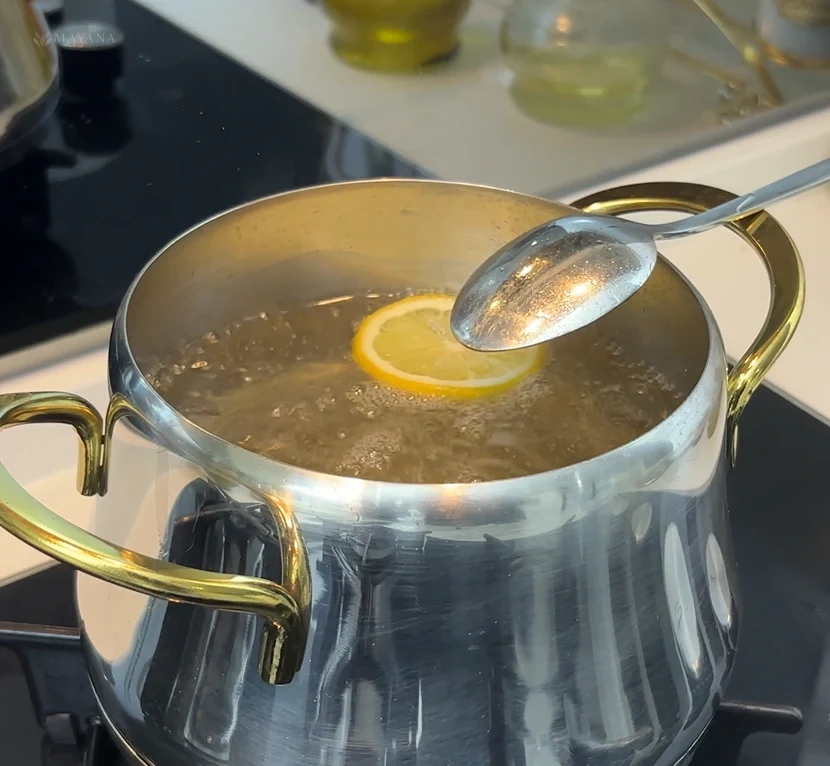
- Put the sugar and water in a saucepan; stir carefully until the sugar dissolves.
- Once it starts boiling, do not stir it constantly without need.
- For standard baklava syrup, approximately 105°C is a useful reference for a medium-thick consistency.
- To reduce the risk of crystallization, add a small amount of lemon juice or citric acid during the last few minutes, according to the recipe.
- Calculate the amount of syrup based on the tray and the dessert’s absorption capacity, not per person.
Common Mistakes
Using the same ratio for every syrup-soaked dessert
Why it causes problems: Baklava, kadayıf, revani, and tulumba require syrups of different consistencies.
Correct use: Consider the dessert’s structure; use 1:1 as the starting point for standard baklava.
Checking only the number of cups without checking the consistency
Why it causes problems: Boiling time and the saucepan’s surface area change the amount of water lost.
Correct use: If possible, verify the target consistency, such as approximately 105°C, with a kitchen thermometer.
Assuming very thick syrup is higher quality
Why it causes problems: An overly concentrated syrup may not penetrate the dessert easily and can increase the tendency to crystallize.
Correct use: Choose a consistency that suits the dessert’s absorption capacity.
Trying to reach the same consistency by reducing the sugar and boiling for longer
Why it causes problems: Long boiling can unnecessarily change the flavor and color.
Correct use: First establish a reliable syrup ratio, then boil it only until it reaches the needed thickness.
Mayana's Recommendation
- Using grams and milliliters instead of cups makes it easier to repeat the same syrup in later batches.
- For baklava, start with 1 kg sugar + 1 liter water; if the result seems too light, reduce the water gradually in the next batch.
- Determine whether to pour the syrup hot or cold based on the dessert's own recipe.
Additional Information
One glass of water can be considered approximately 200 ml; because the weight of granulated sugar in a glass varies with the size of the crystals and how it is packed, weighing it in grams is more reliable for professional consistency. The amount of lemon juice in the syrup also varies with the total volume and the desired acidity.
Frequently Asked Questions
What is the basic water-to-sugar ratio for syrup?
For standard homemade baklava, 1:1—for example, 1 kg sugar + 1 liter water—is a reliable starting ratio.
How do you make baklava syrup thicker?
Reduce the water gradually to raise the sugar-to-water ratio to approximately 1.25:1 or 1.5:1; however, adjust it according to how much syrup the dessert can absorb.
What temperature should baklava syrup reach?
The Turkish Ministry of National Education's baklava training material recommends boiling the syrup to approximately 105°C for a medium consistency.
More Kitchen Information in the Ingredients and Measurements Category
Find explanations, tips, and practical information published in the Ingredients and Measurements section, all in one place.