
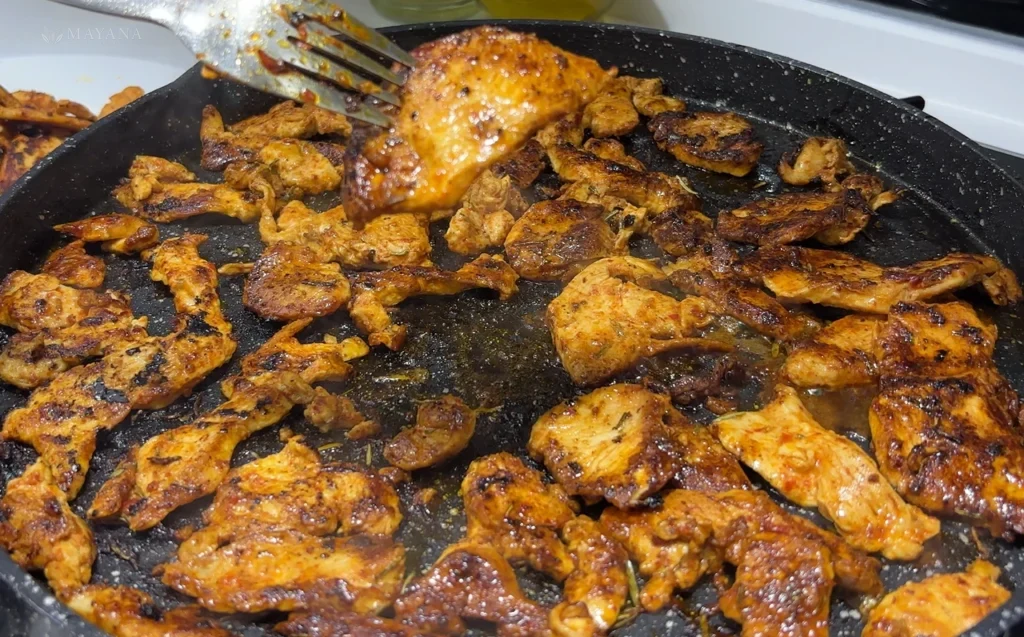
Cooking Chicken on High Heat, Then Low
Browning the chicken over high heat first, then cooking the inside over lower heat, helps balance surface browning with even cooking throughout.
Quick Answer
This technique relies on quickly browning the outside of the chicken, then cooking the inside over lower or medium heat. It is especially useful for thick chicken breasts and bone-in pieces, helping the center reach a safe temperature without burning the outside. For safety, the thickest part must reach at least 74 °C.
In This Guide
Key Reasons
-
High heat quickly removes moisture from the surface and encourages browning. If the same high heat continues throughout cooking, the outside of a thick chicken piece may become too dark while the center is not fully cooked. Lowering the heat in the second stage allows the center temperature to rise more gradually.
-
You can use this technique entirely in a skillet or brown the chicken in the skillet and finish it in the oven. As the pieces get thicker, using a thermometer becomes more important; color alone does not indicate that the chicken is safely cooked.
Proper Application
- Pat the chicken dry with paper towels. For even thickness, butterfly very thick breasts or gently pound them thinner.
- Preheat the skillet over medium-high to high heat, then add a small amount of oil suitable for high-heat cooking.
- Place the chicken in the skillet and cook the first side without moving it for about 2–3 minutes, until well browned.
- Turn the chicken and briefly brown the second side as well.
- Reduce the heat to medium-low. Cook thick pieces in the skillet with the lid partially covered, or finish them in a preheated oven.
- Insert the thermometer into the thickest part without touching the bone. Stop cooking when the internal temperature reaches at least 74 °C.
- Let the chicken rest for a few minutes before cutting it.
Common Mistakes
Cooking Everything Over High Heat
Why it causes problems: The outside may become too dark while the center fails to reach a safe temperature, or the meat may dry out more than necessary.
Correct use: After the first browning, reduce the heat and monitor the center temperature with a thermometer.
Crowding the Skillet
Why it causes problems: The skillet temperature drops quickly, and instead of browning, the chicken begins releasing its juices and steaming.
Correct use: Leave space between the pieces and cook in batches if necessary.
Judging Doneness by Color
Why it causes problems: The chicken may remain pink even after reaching a safe temperature, or it may look white on the outside while the inside is not hot enough.
Correct use: Measure at least 74 °C at the thickest point with a food thermometer.
Mayana's Recommendation
Mayana tip: The second stage can be very brief for thin chicken pieces, while the lower-heat stage is the main control point for thick breasts and bone-in thighs. Drying the surface before placing the chicken in the skillet makes browning noticeably easier.
Additional Information
The USDA gives 165 °F, or approximately 74 °C, as the safe minimum internal temperature for all chicken products. If the thermometer touches the bone, the reading may be inaccurate; place the probe in the thickest meaty part.
Frequently Asked Questions
Why Start Chicken on High Heat?
The initial high heat quickly browns the surface. The heat is then reduced to finish cooking thick pieces safely on the inside.
What Internal Temperature Should Chicken Reach?
For food safety, the thickest meaty section should measure at least 74 °C.
Should You Cover the Skillet While Chicken Cooks?
Covering the skillet during the initial browning stage can leave the surface steamed. During the second, lower-heat stage, partially covering the skillet can make it easier to cook thick pieces through.
More Cooking Information from the Cooking Techniques Category
Access the other explanations, tips, and practical information published in the Cooking Techniques section from a single screen.