
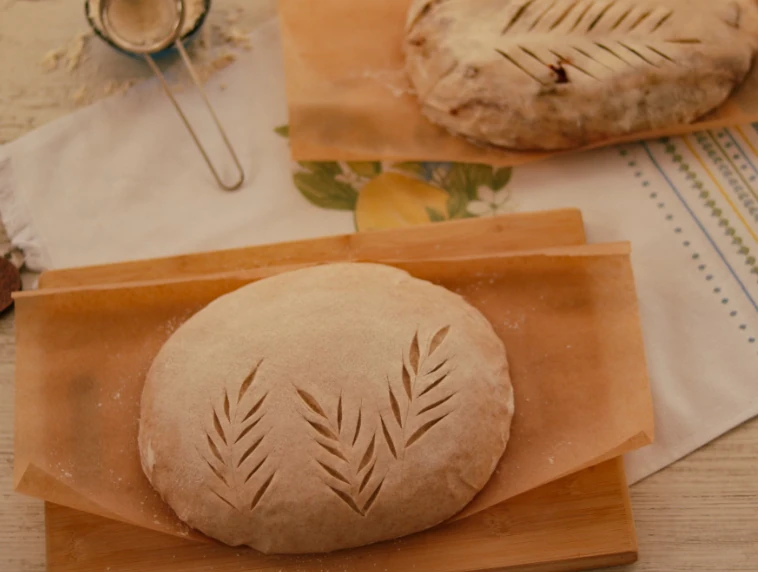
First and Second Proofing for Yeast Dough
Learn step by step how the first fermentation gives yeast dough strength and aroma, while the second fermentation adds volume to the shaped dough.
Quick Answer
In most recipes, yeast dough rests in two stages. During the first fermentation, the dough develops as a single mass after kneading, building gas and aroma; the second fermentation is the final rest after shaping, before the dough goes into the oven, when it regains volume. Manage the timing by watching signs such as volume, texture, and the finger test rather than relying on the clock alone.
In This Guide
Key Reasons
-
During the first fermentation, the yeast consumes sugar and produces carbon dioxide. The gluten network holds this gas, making the dough smoother, more elastic, and lighter. This stage also matters for flavor and dough strength.
-
Some of the gas escapes during shaping, and the gluten stretches again. The second fermentation allows the shaped dough to regain volume. If the second proof is too short, the dough may crack unevenly in the oven and remain dense; if it lasts too long, the gluten may no longer hold the gas and the dough may collapse in the oven.
Proper Application
- Mixing and Kneading: Knead the dough until it reaches the gluten development specified in the recipe.
- First Fermentation: Transfer the dough to a clean bowl and cover it. At approximately 22–26 °C, most standard yeast doughs gain noticeable volume in 1–2 hours.
- Check the First Stage: The dough should reach approximately 1.5–2 times its original volume and look smoother, airy, and lively. High-hydration doughs can be folded during this process.
- Divide and Shape: Deflate the dough as needed, divide it, and shape each piece so the surface is taut.
- Second Fermentation: Cover the shaped dough and let it rest again. In most recipes, this takes 30–90 minutes, depending on the environment and the dough.
- Finger Test: Lightly press the surface to a depth of approximately 1 cm with a floured finger. If the indentation slowly and partially springs back, the dough is generally ready for the oven. If it springs back immediately, wait a little longer; if the indentation remains completely and the dough begins to collapse, it may be over-fermented.
- Preheat the oven before the second fermentation ends, and bake the ready dough without letting it stand.
Common Mistakes
Treating the First and Second Fermentations as the Same Stage
Why it causes problems: The final volume development needed after shaping may be skipped or unnecessarily prolonged.
Correct use: Treat the first stage as dough development and the second as the final volume development of the shaped dough.
Relying Only on the Clock
Why it causes problems: Room temperature, water temperature, the amount of yeast, and the size of the dough all affect the timing.
Correct use: Use the timing as a guide, and watch the volume and finger test.
Overextending the Second Fermentation
Why it causes problems: The gluten network weakens, the dough cannot achieve enough oven spring, and it may collapse.
Correct use: Put the dough in the oven when it feels light and airy and the indentation from your finger springs back slowly.
Deflating the Dough Forcefully After the First Fermentation
Why it causes problems: The dough structure is strained unnecessarily, and the even distribution of gas may be disrupted during shaping.
Correct use: Release the gas gently as the recipe directs, then shape the dough with care.
Mayana's Recommendation
- Mayana tip: Mark the dough’s starting level on the outside of the bowl with tape. This makes it easier to track whether it has doubled instead of relying on guesswork.
- If the dough is rising too quickly, cool the environment rather than adding more yeast; slower fermentation gives the flavors time to develop.
- The second fermentation is more sensitive than the first. Keep the oven ready so you do not have to wait for it to heat once the dough reaches the right point.
Additional Information
King Arthur Baking notes that most bread doughs have two rises: the first stage is called bulk fermentation, while the stage after shaping is technically called proofing. Around 22–26 °C is a useful range for a home kitchen, but the dough itself and the recipe always take priority.
Frequently Asked Questions
What Is the First Fermentation?
It is the bulk fermentation stage after kneading, when the dough develops gas, aroma, and structure as a single mass.
Why Is the Second Fermentation Used?
It helps restore the volume lost during shaping and ensures the product enters the oven light and airy.
How long should yeasted dough rest during the first fermentation?
For most standard doughs, about 1–2 hours at around 22–26 °C is a reasonable starting range; volume and texture are more reliable indicators than time.
How can you tell when the dough’s second fermentation is complete?
If the indentation slowly and partially springs back when you press it lightly with your finger, the dough is generally ready for the oven.
More Cooking Information from the Cooking Techniques Category
Access the other explanations, tips, and practical information published in the Cooking Techniques section from a single screen.