
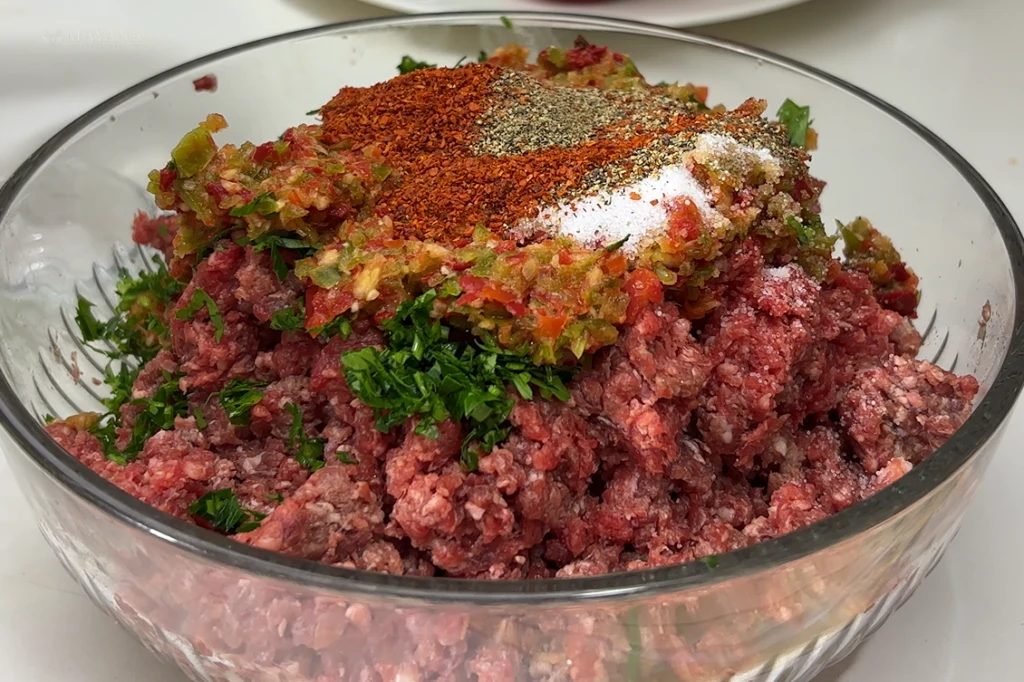
Cooking Kebab Mixture Without Resting It
A short cold rest improves the shape and cohesion of many homemade kebab mixtures, but the same rule does not apply to every traditional kebab.
Quick Answer
Cooking the kebab mixture immediately after kneading it especially in homemade mixtures containing ground meat, tail fat, salt and moist aromatics can make it harder for the mixture to hold onto the skewer and stay evenly combined. In these mixtures, chilling for 30-60 minutes is practically helpful. However, it is not correct to treat this as an unchanging rule for all kebabs: in the geographically designated Adana kebab method, the meat and tail fat are rested beforehand, then the mixture is thoroughly kneaded and brought together; the mixed kebab mixture is not defined as needing to rest for hours as a separate requirement.
In This Guide
Key Reasons
During resting, the mixture cools, the fat firms up and the mixture may become easier to shape onto skewers. Salt and kneading help the myofibrillar proteins in the meat—especially myosin—form a sticky bond at the surface; chilling may help this structure work more consistently. The MEB Sarma Beyti method explicitly calls for the prepared kebab mixture to rest in the refrigerator for one hour.
However, kebab technique varies by type. In the official production description for Adana kebab, the main resting stage comes before the meat and tail fat are chopped with a zırh. So the accurate message is not “resting is always required,” but that chilling can be helpful depending on the mixture’s recipe and preparation method.
Proper Application
- Keep the meat and fat cold; do not let the fat melt in your hands while you work.
- Add the salt and spices as directed in the recipe, then knead the mixture until it is evenly combined and slightly sticky.
- For homemade ground-meat kebab or Beyti-style mixtures, cover the bowl and rest the mixture in a 0-4°C refrigerator for 30-60 minutes.
- If the mixture contains chopped peppers or onions, remove their excess moisture; resting alone cannot correct the looseness caused by too much liquid.
- When shaping the meat onto skewers, spread it to an even thickness and press the ends firmly onto the skewer.
- For food safety, cook ground beef, lamb, pork or similar beef-and-lamb mixtures to at least 71°C in the center at home.
Common Mistakes
Putting the mixture onto skewers while still warm, immediately after kneading
Why it causes problems: Fat softened by the warmth of your hands and a loose mixture can make it harder to hold onto the skewer, increasing the chance of losing its shape during cooking.
Correct use: Rest homemade ground-meat kebab mixtures, covered, at 0-4°C for 30-60 minutes.
Treating resting as the solution to a mixture that is too wet
Why it causes problems: Excess moisture from onions or peppers does not disappear during resting and can weaken the mixture’s bond.
Correct use: Finely chop moist vegetables and squeeze out their excess moisture; prepare the mixture with the recipe’s intended fat-to-meat balance.
Resting the mixture at room temperature
Why it causes problems: This is not safe for ground meat because of bacterial growth.
Correct use: Rest the mixture in the refrigerator at 0-4°C, and do not leave raw meat out for long.
Assuming that every type of kebab must rest for the same length of time
Why it causes problems: Traditional techniques differ; for example, the official Adana kebab method rests the meat and tail fat beforehand but does not specify additional required hours for the kneaded mixture.
Correct use: Follow the kebab’s traditional technique; for homemade ground-meat mixtures, use a short cold rest to improve structure and make shaping easier.
Mayana's Recommendation
Before resting the mixture, squeeze a small piece in your palm: if the surface becomes sticky, the pieces of fat remain cold and distinct, and the piece holds together without cracking, the mixture is beginning to bind. Resting supports a well-prepared mixture; it cannot hide an incorrect ratio or excess moisture.
Additional Information
In Hatay Sandık İçi’s homemade Adana method, the mixture rests in the refrigerator for at least 3 hours; the MEB Sarma Beyti method uses 1 hour. This difference shows that there is no single required resting time. In the official definition of Adana kebab, the pieces of meat and tail fat rest for one day, then are chopped with a zırh and kneaded. Do not leave raw ground meat at room temperature for more than 2 hours; this limit is shorter in hot conditions.
Frequently Asked Questions
How long should kebab mixture rest?
For homemade ground-meat kebabs, a 30-60 minute rest in the refrigerator is a good starting point; some recipes call for longer.
Does Adana kebab mixture have to rest for hours?
In the official Adana kebab method, the meat and tail fat are rested beforehand; no additional required hours are specified for the kneaded mixture.
Why does kebab mixture fall off the skewer?
Excess moisture, warm fat, insufficient kneading, an incorrect meat-to-fat balance and failing to spread the mixture evenly onto the skewer are the most common causes.
More kitchen tips in the Common Mistakes category
Access the other explanations, tips and practical guidance published in the Common Mistakes section from a single screen.