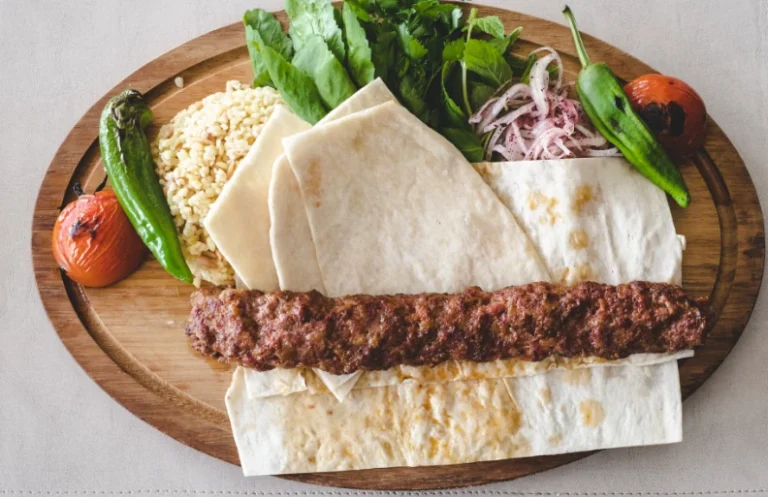
Layered Lavash Kebab on Skewers
An oven-baked kebab made with thin layers of seasoned ground beef, portioned on skewers.
What Is Lavaş Kebabı?
Lavaş kebabı is made by spreading seasoned ground beef evenly between layers of lavash, cutting the stack into strips, threading them onto skewers, and baking them. Spread the beef thinly, squeeze excess moisture from the grated onion, and avoid compressing the pieces when skewering so the layers hold together. Serve the baked kebab hot over garlic yogurt with a butter-tomato sauce.
- Yield
- Main dish for 6
- Servings
- 6 servings
- Total time
- 55 min
- Difficulty
- Medium
- Prep time
- 30 min
- Cook time
- 25 min
Ingredients for Lavaş Kebabı
For the lavash and beef mixture
For the garlic yogurt
For the butter and tomato paste sauce
For skewering
How to Make Lavaş Kebabı
Enlarges the steps and, on supported browsers, helps keep your screen awake.
-
01
Preheat the Oven and Prepare the Skewers
20 minutesPreheat the oven to 190°C with both top and bottom heat. Soak the wooden skewers in water as you begin preparing the ingredients; drain and dry them before using.
-
02
Knead the Ground Meat Mixture
6 minutesPlace the ground meat in a large bowl. Add the grated onion, lightly squeezed to remove excess water, the finely chopped parsley, salt, black pepper, and red pepper flakes. Knead for approximately 5–6 minutes, until the mixture is smooth and slightly sticky.
-
03
Make Sets of Four Lavash Layers
10 minutesFor the first block of four lavash, lay one lavash on the counter and spread about one-sixth of the ground meat mixture over it in a very thin, even layer. Repeat with the second and third lavash, then cover with the fourth. Prepare the second block the same way with the remaining four lavash.
-
04
Cut and Skewer the Strips
10 minutesCut each lavash block into even strips about 3–4 cm wide. Turn the strips on their sides so the layered edges stand upright, arrange them side by side, and push a wooden skewer through their centers. Cut the skewers into individual portions and arrange them on a baking sheet.
-
05
Bake Until Cooked Through
25 minutesPlace the baking sheet on the middle rack of a preheated 190°C oven. Bake for about 22–25 minutes, until the lavash edges are lightly browned and the ground meat is fully cooked. Check the center of one of the thickest pieces.
-
06
Prepare the Yogurt and Tomato Paste Sauce
8 minutesMix the yogurt with the crushed garlic and salt. Melt the butter in a separate small skillet, then cook the tomato paste and red pepper flakes for 30–60 seconds. Add the hot water and simmer gently for 2–3 minutes to make a pourable sauce. You can do this while the kebab is in the oven.
-
07
Serve Hot
3 minutesSpread the garlic yogurt on a serving plate. Let the lavash kebabs rest for 3–5 minutes after removing them from the oven, then place them over the yogurt. Drizzle the buttery tomato paste sauce over them just before serving, and serve hot.
Lavaş Kebabı
Mastery Guide
Review the technical details, common mistakes and correct practices that determine the recipe result.
Critical Tips
Spread the Meat Mixture Thinly and Evenly
Thick layers of meat can leave the lavash doughy inside and extend the cooking time.
Best practice: Spread the mixture in a thin, even layer across each lavash, all the way to the edges.
Drain Excess Onion Liquid
Excess liquid from the grated onion quickly softens the lavash and can cause the layers to slide.
Best practice: After grating the onion, gently squeeze it by hand to remove only the excess liquid.
Check the Center for Doneness
Even if the layered ground meat browns on the outside, the center may take longer to cook.
Best practice: Check that the ground meat is fully cooked in the center of the thickest piece and, if possible, has reached at least 71°C.
Common Mistakes
Leaving the Filling Too Wet
A watery ground-meat filling soaks the lavash, makes the layers slip when sliced, and weighs down the texture.
Best practice: Control the onion's liquid, and do not add extra liquid to the filling.
Cutting the Strips Unevenly
Pieces of different thicknesses will not cook evenly in the same amount of time.
Best practice: Cut the strips to roughly the same width, and place similarly sized pieces on the same skewer.
Letting It Sit in the Sauce After Cooking
The yogurt and hot sauce quickly soften the lavash's crisp edges.
Best practice: Spread the yogurt on the plate, place the kebab on top, and drizzle over the sauce just before serving.
Why Does This Happen?
Why Does Medium-Fat Ground Meat Give Better Results?
Very lean ground meat can dry out more quickly in the oven, while medium-fat ground meat keeps the layers juicier.
Best practice: Choose ground beef with approximately 20% fat.
Why Is It Important to Skewer the Layers Vertically?
The vertically positioned lavash-and-ground-meat layers expose more surface area to the heat and help the portions hold their shape.
Best practice: Turn the cut strips on their sides and thread them onto the skewer with the layered surfaces visible.
Why Is a High Oven Temperature Necessary?
Sufficient heat is needed to cook the layered ground meat safely and crisp the lavash edges.
Best practice: Cook in a preheated 190°C oven, watching the browning.
Mayana Tips
Add the Sauce Just Before Serving
The tomato-paste butter and yogurt soften the lavash as they sit.
Best practice: Prepare the sauces separately and add them to the plate as soon as the kebab comes out of the oven.
Prepare Two Four-Lavaş Layers
A single, very tall block falls apart more easily when cut and skewered.
Best practice: Work more carefully by folding the eight lavaş into two groups of four.
Soak the Skewers First
The ends of wooden skewers can darken quickly in the oven.
Best practice: At the start of the preparation, soak the skewers in water for 15–20 minutes, then drain them.
Ingredients & Measurements
Choose Fresh, Flexible Lavaş
Dried lavaş cracks when cut and can fall apart when threaded onto a skewer.
Best practice: Use a soft, medium-sized lavaş that folds easily.
Use Medium-Fat Ground Beef
The meat's own fat reduces dryness in the oven and balances the flavor of the layers.
Best practice: Choose ground beef with approximately –20 fat instead of very lean ground beef.
Thin the Tomato Paste with Water
When thick tomato paste is added directly to the butter, the sauce can remain heavy and overpowering in one spot.
Best practice: Cook the tomato paste in the butter briefly, then thin it with hot water until pourable.
Cooking Techniques
Join the Layers with a Thin Meat Mixture
An even lavaş–ground beef–lavaş arrangement makes cutting and cooking easier.
Best practice: Create three thin ground-beef layers in each four-lavaş block.
Turn the Strips on Their Sides and Skewer Them
Turning the cut surface of the layers outward improves their shape and increases the cooking surface.
Best practice: Stand the strips upright and pass a wooden skewer through their centers.
Cook in a Preheated Oven
A cold oven can lengthen the time the ground beef releases its moisture and soften the lavaş.
Best practice: Place the tray in a preheated 190°C oven and bake for approximately 25 minutes.
How to Store and Make Lavaş Kebabı Ahead
- Serving temperature
Serve hot; the yogurt should be cold or cool, and the tomato sauce should be hot.
- Best resting time
Let the kebab rest for 3–5 minutes after baking before serving.
- Refrigerator storage
Store the cooked lavash kebab separately from the yogurt and sauce in a covered container at 4°C for up to 2 days.
- Room-temperature limit
Do not leave the meat-filled lavash at room temperature for longer than 2 hours.
- Freezing
You can freeze the cooked kebab without the yogurt and sauce, wrapped airtight, for up to 1 month.
- Thawing method
Thaw frozen kebab in the refrigerator; do not thaw it by leaving it at room temperature for a long time.
- Reheating
Reheat thawed or refrigerated kebab in a 180°C oven for 8–10 minutes, until heated through.
- Make-ahead steps
The ground beef mixture can be prepared earlier the same day. Refrigerate the folded and skewered uncooked kebab, covered, for a few hours and bake it close to serving time.
- Serving suggestion
Spread the garlic yogurt on the plate, place the hot lavash kebab on top, and drizzle over the butter-tomato sauce just before serving.
Nutrition
1 serving: 1/6 of the recipe; including serving additions
Calculated approximately using standard product and household-measure nutrition values for 1/6 of the recipe. Values are approximate calculations.
Frequently Asked Questions About Lavaş Kebabı
At what temperature should lavaş kebabı be baked?
Bake in a preheated 190°C oven with both top and bottom heat for approximately 22–25 minutes. With layered ground meat, time alone is not enough; check that the meat in the center of the thickest piece is fully cooked and, if possible, has reached at least 71°C.
Can lavaş kebabı be baked at 180°C?
Yes, but it will usually take longer at 180°C. Depending on your oven and the thickness of the pieces, it may take 25–30 minutes. Do not remove it from the oven based on time alone; check that the ground meat is fully cooked.
Why does the ground meat separate from the layers in lavaş kebabı?
The layers may slip if the mixture is not kneaded enough, the onion remains too watery, or the ground meat is spread too thickly and unevenly over the lavaş. Knead the mixture for 5–6 minutes, remove the excess onion juice, and make thin, even layers.
How can you keep the lavaş from becoming soft?
Gently squeeze out the excess juice from the grated onion, do not add extra liquid to the mixture, and do not pour the yogurt and tomato paste sauce over the lavaş before baking. Adding the sauces when serving helps the crisp edges stay crisp longer.
Can lavaş kebabı be prepared ahead of time?
You can prepare the ground meat mixture earlier the same day. After folding and skewering the lavaş, you can keep it covered in the refrigerator for a few hours; for the best texture, bake and sauce it close to serving time.
What type of ground meat should you use for lavaş kebabı?
Medium-fat ground beef gives one of the most balanced results. Very lean ground beef can dry out more easily in the oven. Ground beef with approximately 15–20% fat produces a juicier, more cohesive filling between the lavaş layers.
You may also like