
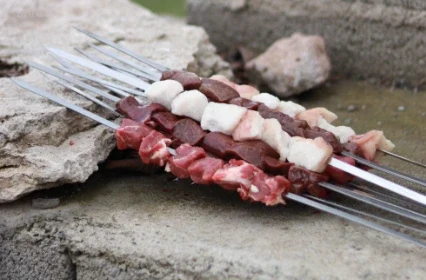
How to Balance Tail Fat in Kebab
Adjust the tail fat to match the meat’s own fat content to keep the kebab juicy, help it hold on the skewer, and add balanced flavor without making it heavy.
Quick Answer
There is no single universal ratio for tail fat in kebab; the right amount depends on the meat’s existing fat content and the type of kebab. Use less with moderately fatty meat and more with very lean meat. For a balanced starting point at home, keep tail fat at about 10–15% of the meat’s weight, increasing it cautiously if the meat is very lean.
In This Guide
Key Reasons
-
Tail fat adds not only flavor to the kebab mixture but also moisture and tenderness during cooking. As the amount increases, however, so do the greasy feel in the mouth and the risk of flare-ups over the coals. For that reason, assess the ratio together with the meat’s existing fat content rather than treating it as a fixed number.
-
The geographical indication registration for Adana Kebab states that, when needed based on the meat’s fat content, tail fat may be used at approximately 15% of the minced meat’s weight. Another Adana kebab recipe on the Kültür Portal lists 300 g of tail fat for 1 kg of meat. This difference shows that there is no single general standard for the amount of tail fat in kebab; it can vary by recipe type.
Proper Application
- First, assess the meat’s fat content: If you are using moderately fatty lamb or minced meat, start with a low amount of tail fat. Increase it gradually for very lean meat.
- Keep the starting ratio controlled: For homemade minced-meat kebab, about 50–75 g of tail fat for 500 g of meat is a balanced starting range. If the meat is very lean, you can increase the amount to 75–100 g; if the meat is already noticeably fatty, use less.
- Do not leave the tail fat in large pieces: Fat minced with a traditional knife or cut very finely to match the meat’s texture will distribute more evenly through the mixture.
- Do not leave pockets of fat in the mixture: Knead the meat and tail fat until evenly combined. If too much fat collects in one area, it may run off the skewer during cooking and brown unevenly.
- Cook over embers, not open flames: Melting tail fat can create flames when it drips onto the coals. Turn the skewers frequently, and if direct flames rise, move the skewer briefly to a cooler area.
- Keep the first test small: Cook a small piece of the mixture to check the fat level, salt, and texture; adjust the ratio if needed before preparing the main skewers.
Common Mistakes
Adding a fixed amount of tail fat without considering the meat’s fat content
Why it causes problems: The same ratio can make fatty meat feel heavy, while a low ratio may not prevent dryness in lean meat.
Correct use: Reduce or increase the amount of tail fat according to the meat’s own fat content.
Leaving the tail fat in large pieces
Why it causes problems: The fat will not distribute evenly through the mixture; some bites may be very fatty while other areas remain dry.
Correct use: Prepare the tail fat in small, even pieces by mincing it with a traditional knife or cutting it finely with a knife.
Trying to boost flavor with too much tail fat
Why it causes problems: Excess fat can overpower the meat’s flavor and cause intense flare-ups over the coals during cooking.
Correct use: Use the fat as a supporting ingredient, and complete the flavor with good-quality meat, proper salting, and controlled cooking over embers.
Skipping a test cook after preparing the mixture
Why it causes problems: You may not notice an imbalance in the fat, salt, or texture until all the skewers have been prepared.
Correct use: Cook a small piece of the mixture and check the result before cooking the main batch.
Mayana's Recommendation
- Mayana tip: When working with moderately fatty meat, start by testing tail fat at about 10–15% of the meat’s weight. Increase it in small steps if the meat is very lean; do not start with a high ratio.
- Do not rely on fat alone to help the mixture hold on the skewer: Kneading the mixture evenly, keeping the meat from becoming too wet, and coating the skewer with an even thickness are just as important as the fat ratio.
- Pay attention to the coals: Because some of the tail fat will melt during cooking, controlling flare-ups is essential for even browning.
Additional Information
-
The tail fat ratio can vary by type of kebab. If you want to prepare a kebab with a geographical indication or regional recipe according to its original specifications, follow that product’s registered production measurements. For a general homemade minced-meat kebab, adjusting the ratio to the meat’s fat content gives better results.
-
If the mixture leaves a noticeable amount of fat in the pan or on the grill, creates a heavy coating in the mouth, or keeps flaring over the coals, reduce the tail fat next time. If the result is dry, crumbly, and tough, reassess the amount of tail fat along with the meat’s fat content.
Frequently Asked Questions
How much tail fat should be added to 500 grams of ground meat?
The amount varies depending on the meat's fat content, but about 50–75 grams of tail fat is a balanced starting amount for 500 grams of medium-fat meat. If the meat is very lean, you can gradually increase the amount to 75–100 grams.
What happens if you use too much tail fat in kebabs?
Too much tail fat can make the kebab heavy and overly greasy, mask the flavor of the meat, and increase flare-ups on the grill as the dripping fat ignites.
Does tail fat help kebab stay on the skewer?
Tail fat helps keep the mixture soft and juicy, but it is not the only factor that determines whether it stays on the skewer. Kneading the mixture properly, keeping it from becoming too wet, spreading it evenly over the skewer, and using meat with the right texture are also important.
Do you need to add tail fat to fatty ground meat?
Not always. If the meat is already noticeably fatty, reduce the tail fat or leave it out altogether. The goal is not to increase the total amount of fat, but to balance the kebab's flavor, juiciness, and texture.
How should tail fat be added to the kebab mixture?
Chop the tail fat very finely or mince it with a zırh, then distribute it evenly throughout the meat. Large pieces of fat may melt unevenly as they cook, leaving some bites excessively greasy.
Can you make kebabs without tail fat?
Yes. You can make kebabs without tail fat when you use quality meat with enough fat. However, the result may be drier, especially with lean meat, so choosing the right meat and controlling the cooking become more important.
Other Kitchen Tips in the Mayana Tips Category
Access the other explanations, tips, and practical information published in the Mayana Tips section from a single screen.