Kagit Kebab: Baked Paper Kebab
Vegetable-seasoned ground meat bakes on parchment with tomato and green pepper until lightly browned.
Keep the Vegetable Mixture Coarse
Pulse the onion, peppers, garlic, and parsley rather than puréeing them, then drain off any noticeable liquid for 1–2 minutes. Excess moisture can loosen the meat and prevent browning. Use moderately fatty, cold ground meat, knead only 2–3 minutes, and spread each portion evenly so the kebabs cook at the same rate without drying out.
- Yield
- Serves 4
- Servings
- —
- Total time
- 50 min
- Difficulty
- Easy
- Prep time
- 25 min
- Cook time
- 25 min
Ingredients for Kagit Kebab
For the ground meat mixture
For the topping
How to Make Kagit Kebab
Enlarges the steps and, on supported browsers, helps keep your screen awake.
-
01
Prepare the oven and parchment
4 minutesPreheat the oven to 220°C with both top and bottom heat. If the packaging for your parchment allows a higher temperature, the kebabs can also be made at 230°C in less time. Cut four pieces of parchment, approximately 30 × 30 cm each. Make sure the paper does not touch the oven walls or the heating elements directly.
-
02
Prepare the vegetables
7 minutesPeel the onion and cut it into large pieces. Remove the stems and seeds from the kapya and green peppers, then roughly chop them. Peel the garlic. Wash the parsley, drain it thoroughly, and remove the thick stems. Slice the tomato for the topping into thin rounds or half-moons. Cut the two green peppers in half lengthwise.
-
03
Pulse the vegetables without puréeing
Process the onion, kapya pepper, green pepper, garlic, and parsley separately or in small batches, depending on the capacity of your food processor. Do not run the processor continuously. Use short pulses to produce very small pieces that still have some visible texture. Do not turn the vegetables into a completely liquid purée. If a noticeable amount of vegetable juice collects at the bottom of the bowl, leave the mixture in a strainer for 1–2 minutes. Do not squeeze the vegetables completely dry by hand.
-
04
Knead the ground meat mixture
Place the ground meat in a large mixing bowl. Add the processed vegetables, salt, paprika, and black pepper. Knead the mixture by hand for approximately 2–3 minutes, until the vegetables and spices are evenly distributed through the meat. Do not knead longer than necessary, or the meat may warm up and release its fat. After handling raw ground meat, clean your hands, work surface, and kitchen tools with hot water and detergent.
-
05
Divide the mixture into four equal portions
Divide the prepared ground meat mixture into four equal portions. Equal portions help the kebabs cook at the same rate and to the same degree. If you are using a kitchen scale, weigh the total mixture and divide it into four equal portions.
-
06
Shape the Kebabs to an Even Thickness
Place each portion of ground meat in the center of a separate piece of parchment paper. Lightly wet your hand or use a flat spatula to spread the mixture into a round shape.
Prepare each kebab about 14–16 cm in diameter and 7–8 mm thick. Tidy the edges with the flat side of a knife or a spatula.
Fold the edges of the parchment paper only so it sits neatly on the baking sheet. Do not cover the ground meat completely with the paper.
The registered Antakya Kâğıt Kebabı definition prepares portions weighing 150–250 grams as disks about 0.5–1 cm thick; this range also promotes even cooking in a home kitchen.
-
07
Add the Tomatoes and Peppers
Distribute the tomato and green pepper slices evenly over the four kebabs. Press the vegetables lightly onto the surface instead of burying them in the mixture.
Do not slice the tomatoes too thickly. Thick tomato slices can release too much water, delaying browning on the kebabs’ surface. -
08
Cook in the Oven
20–25 MinutesPlace the baking sheet in the center of a preheated oven set to 220°C with heat from above and below. Cook the kebabs for about 20–25 minutes.
If your parchment paper is rated for 230°C and you want to keep the temperature used in the original recipe, you can cook the kebabs at 230°C; however, start checking them at the 18-minute mark.
Because ovens vary, do not rely on the cooking time alone. Remove the baking sheet from the oven when the kebabs’ edges are lightly browned and the thickest point in the center has reached at least 71°C.
-
09
Rest and Serve Hot
5 MinutesAfter removing the kebabs from the oven, let them rest on the baking sheet for 5 minutes. Then transfer them to serving plates with the parchment paper they cooked on.
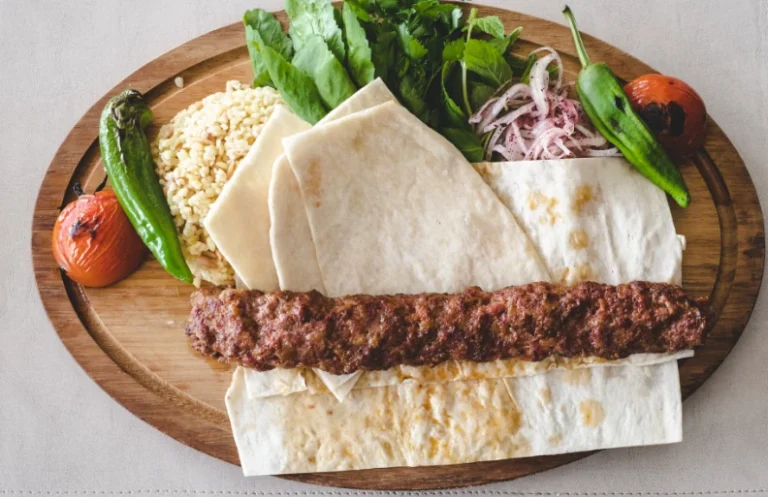
Serve with warm lavash, tırnak pide, sumac onions, parsley, roasted peppers, ayran, or a seasonal salad.
Kagit Kebab
Mastery Guide
Review the technical details, common mistakes and correct practices that determine the recipe result.
Critical Tips
Do Not Purée the Vegetables
Do not run the onion, pepper, garlic, and parsley continuously in the food processor. Puréeing the vegetables releases too much water; the mixture becomes loose, spreads on the baking sheet, and cooks in its own juices instead of browning.
Control Excess Vegetable Liquid
If a noticeable amount of liquid has collected at the bottom of the food processor bowl, let the vegetables drain in a strainer for 1–2 minutes. Do not squeeze them completely; just reduce the excess liquid that would weaken the mixture.
Use Moderately Fatty, Cold Ground Meat
Very lean ground meat dries out more easily over high heat. Keeping the ground meat cold until you shape it helps prevent the fat from separating from the mixture too early.
Do Not Knead the Mixture Too Long
Stop kneading when the vegetables and spices are evenly distributed. Overkneading can warm and toughen the ground meat, giving it a firm texture after cooking.
Shape All Portions to an Even Thickness
Shape the kebabs to about 7–8 mm thick. If the center is thick and the edges are thin, the kebabs will cook unevenly and the edges may dry out.
Do Not Overcook the Kebab
The ground meat must reach a safe internal temperature, but keeping it in the oven much longer after that increases moisture loss. Remove the kebab when the edges are browned and the center has reached 71°C.
Common Mistakes
Puréeing the Vegetables Completely
Vegetables processed too much release excess water; the ground-meat mixture becomes loose and spreads in the oven. Use the food processor in short pulses to preserve a coarse texture.
Using one tablespoon of salt
For 400 grams of ground meat, this amount can make the kebab overly salty. Start with approximately 5–6 grams of salt.
Adding wet parsley directly to the mixture
Water left on the parsley can combine with the vegetables’ natural moisture and make the mixture too wet. Drain the parsley thoroughly.
Leaving the kebab thick in the center
The center will cook more slowly while the edges may dry out. Spread the mixture to an even thickness from the center to the edges.
Using thick tomato slices
Thick tomato slices can release a lot of water and delay browning on top of the ground meat. Slice the tomatoes thinly.
Starting in a cold oven
Ground meat heats slowly in an oven that has not reached the right temperature, and the vegetables release more water. Put the tray in only after the oven reaches the target temperature.
Leaving the kebab in longer to brown it more
If you leave the ground meat in the oven after it is cooked, it loses moisture and becomes tough. Check the center temperature and texture as well as the color.
Why Does This Happen?
Why Do Processed Vegetables Thin the Mixture?
When onions and peppers are processed for too long, their cell structure breaks down and releases their water quickly. This water weakens the binding of the ground meat and can cause the kebab to spread on the tray.
Why Does Medium-Fat Ground Meat Give a Softer Result?
The fat in the ground meat melts during cooking and supports the texture between the meat fibers. Very lean ground meat can lose moisture more quickly at the same temperature and produce a dry result.
Why Does Ground Meat Shrink as It Cooks?
Heat tightens the meat proteins, causing some of the water and fat in the ground meat to escape. Overkneading the mixture or cooking it for too long can increase shrinkage.
Why Is High Heat Preferred?
Thinly spread ground meat can cook quickly over high heat. This browns the surface while limiting the time the interior is exposed to heat and dries out.
Why Is a Short Rest Necessary?
The juices inside the kebab are very active when it comes out of the oven. Resting it for a few minutes helps the meat juices distribute more evenly throughout the texture.
Mayana Tips
Adjust the Ground Meat Mixture to Your Taste
For a more pronounced kebab flavor, increase the proportion of lamb; for a milder result, use a mixture with more beef. In either case, make sure the ground meat is not completely lean.
Process the Vegetables in Small Batches
Overfilling the food processor can leave the bottom portion puréed while the top remains coarse. Process the vegetables in small batches for a more even texture.
Portion with a Kitchen Scale
Weighing the mixture and dividing it into four equal portions helps the kebabs cook at the same time and keeps the servings looking uniform.
Leave Space Between the Kebabs
Do not place the portions too close together. The space between them helps hot air circulate and allows surface moisture to escape more easily.
Serve on the Parchment Paper
Serving the kebab on the parchment paper it cooked on preserves the dish's character and keeps the meat juices on the serving plate.
Keep the Accompaniments Simple
Sumac onions, parsley, lavash, roasted peppers and ayran complement the flavor of the ground-meat mixture without overpowering it.
Nutrition
Per serving; excluding optional serving additions
Nutrition values may vary by ingredients and serving size.
You may also like