
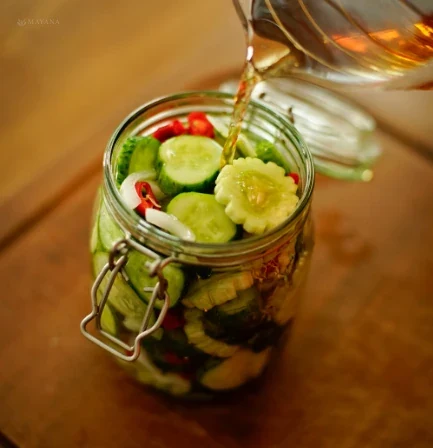
Why Leave Headspace in Pickle Jars?
Filling a pickle jar to the brim can cause overflow, pressure buildup, and brine loss during fermentation. The right amount of headspace should allow room for gas to escape while keeping the vegetables submerged in brine.
Quick Answer
Leaving some headspace in a pickle jar provides room for the carbon dioxide produced during fermentation and for rising brine to move safely. Filling the jar to the brim can increase the risk of overflow, brine loss, and liquid reaching the lid. However, the vegetables must remain submerged in brine; the exact amount of headspace depends on the jar's size and the method used.
In This Guide
Key Reasons
-
During pickle fermentation, microorganisms convert sugar into acid and carbon dioxide. The gas collects in the spaces between the vegetables and can push the brine level upward. If the jar is filled completely to the top, there is no room for this movement, so brine may overflow through the lid or pressure may build around it.
-
Headspace alone is not enough. The vegetables must stay below the surface and submerged in brine. University of Minnesota Extension recommends keeping approximately 2.5–5 cm of brine above the food when fermenting in a wet brine; for large containers or crocks, it recommends filling the container to about 75%, leaving roughly 10–13 cm of space at the top. In small home jars, it is better not to copy the same centimeter measurement directly. Instead, leave room for fermentation and follow the manufacturer’s instructions or a reliable recipe’s guidance for the jar size.
-
The situation is different for pickles preserved by heat processing. Many tested recipes use approximately 1.3 cm of headspace. This measurement is not a universal rule for an actively fermenting jar; it is a separate measurement specified by the recipe for heat processing and vacuum formation.
Proper Application
- Do Not Overfill the Jar: Pack the vegetables firmly without crushing them. After adding the brine, leave space below the lid for the brine to rise during fermentation.
- Keep the Vegetables Submerged: There should be enough brine above the vegetables; use a food-safe fermentation weight if needed.
- Consider Headspace and Brine Level Together: The goal is not to leave as much air as possible, but to create controlled room for gas and liquid to move.
- Use the Lid and Jar Type for the Method: If you have a fermentation lid with an airlock, follow the manufacturer’s instructions. In traditional closed jars that require gas release, manage the pressure according to the method recommended by a safe, reliable recipe.
- Do Not Change the Recipe’s Canning Measurement: If you are using a water bath or another heat-processing method, follow the headspace measurement given in a reliable, tested recipe exactly. Do not use the practical headspace measurement for a fermenting jar in place of the canning measurement.
Common Mistakes
Filling the Jar to the Brim
Why it causes problems: There is no room for gas produced during fermentation or for rising brine to move, so overflow and brine loss may occur.
Correct use: Leave fermentation headspace below the lid when adding the vegetables and brine.
Reducing the Brine Too Much to Create Headspace
Why it causes problems: Some vegetables may remain above the liquid, increasing the risk of unwanted yeast and mold forming on the surface.
Correct use: Keep the vegetables completely submerged in brine while maintaining headspace.
Leaving the Vegetables to Rise to the Surface
Why it causes problems: Pieces that rise above the brine come into contact with oxygen, increasing the risk of spoilage.
Correct use: If needed, use a food-safe fermentation weight to hold the vegetables under the brine.
Treating Fermentation Headspace and Canning Headspace as the Same
Why it causes problems: The two methods have different purposes and processing conditions; using the wrong measurement can cause overflow or prevent the lid from sealing properly during canning.
Correct use: For active fermentation, use the space required by the container and recipe. For pickles preserved by heat processing, use the headspace measurement given in a tested recipe.
Leaving Too Much Headspace
Why it causes problems: Too much air, especially at the beginning of fermentation, can increase the chance of oxygen exposure and make surface problems more likely.
Correct use: Leave only the room needed for gas and brine movement, and keep the vegetables submerged with the jar properly closed.
Mayana's Recommendation
Mayana tip: In a pickle jar, the goal is not “as much empty space as possible,” but a balance of enough room to prevent overflow + enough brine to completely cover the vegetables .
- In small home jars, leave a few centimeters of practical fermentation headspace instead of packing the contents right up to the lid. Think of this as room for overflow, not a universal safety measurement.
- If the brine level rises during the first few days, placing a clean plate beneath the jar will protect the counter. However, continuous overflow may mean the jar is overfilled.
- If the jar lid bulges, excessive pressure builds up, or liquid keeps escaping, check the gas-release method for the fermentation system you are using.
Additional Information
-
During fermentation, you may see light bubbling and the brine level may rise. However, do not eat the pickles if they have softened, become slimy, or developed a distinctly unpleasant, foul odor.
-
For pickles that will be stored for a long time using heat processing, use a reliable, tested canning recipe. Do not arbitrarily change the recipe’s vinegar ratio, jar size, headspace, or processing time.
Frequently Asked Questions
Why is headspace left in a pickle jar?
Headspace allows room for the carbon dioxide produced during fermentation and the rising brine to move. If the jar is filled to the top, the brine may overflow and pressure may build around the lid.
How many centimeters of headspace should be left in a pickle jar?
There is no single centimeter standard that fits every jar for active fermentation; jar capacity and method matter. A few centimeters of overflow space may be practical in small home jars, but the vegetables must remain below the brine. For pickles canned with heat processing, follow the headspace measurement given in the tested recipe.
What happens if there is too much headspace above the pickles?
Too much headspace can create more air space, especially during the early stages of fermentation. The goal is not to leave the jar half empty, but to leave a controlled amount of room for gas and brine movement.
Can the vegetables in a pickle jar remain above the brine?
No. Keeping the vegetables below the brine is a basic practice when fermenting pickles. Pieces that rise to the surface come into contact with oxygen and are more prone to developing unwanted surface growth.
Does leaving headspace when making pickles completely prevent the lid from swelling?
No. Headspace allows room for overflow and liquid movement, but fermentation gas will still form. The gas must be vented safely according to the lid system used; follow the manufacturer’s instructions for airlock systems.
Other Kitchen Tips in the Mayana Tips Category
Access the other explanations, tips, and practical information published in the Mayana Tips section from a single screen.