
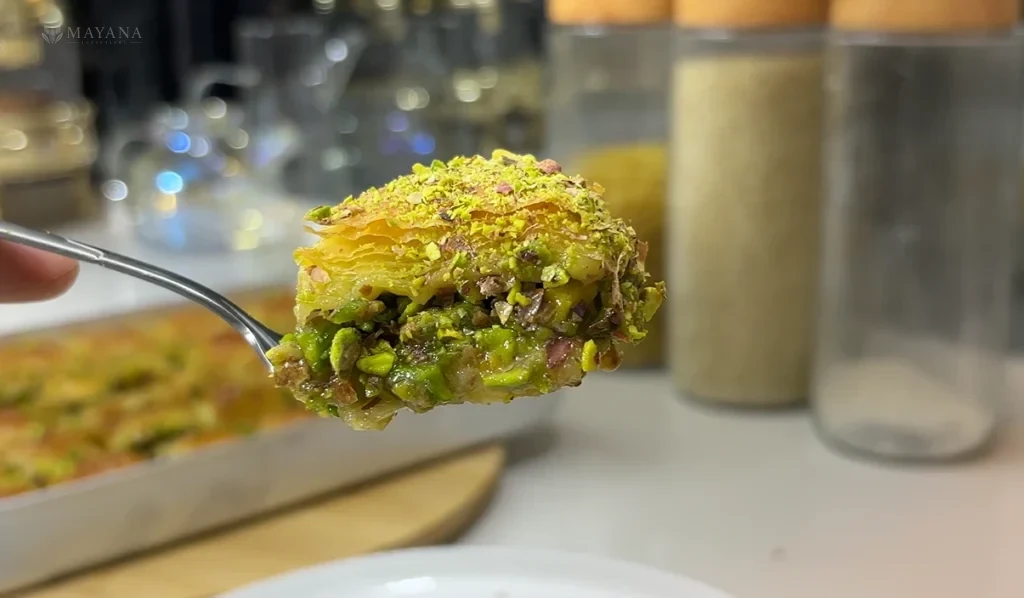
How to Bake Baklava Until the Layers Are Evenly Golden
Manage the oven temperature, rack position, and doneness checks correctly so the bottom and inner layers brown evenly, not just the top.
Quick Answer
To brown baklava layer by layer, bake it patiently in a preheated oven at approximately 165–175 °C instead of scorching the top quickly at high heat. Keeping the tray on the lower-middle rack helps the bottom and middle layers dry and cook before the top becomes deeply colored. The baklava is done not when only the surface turns golden, but when the bottom layers are honey-golden as well.
In This Guide
Key Reasons
-
Baklava is made from many thin layers of pastry. If the heat browns only the top quickly, the surface darkens before enough moisture has escaped from the inner layers, leaving the outside colored while the inside remains doughy.
-
A more even oven temperature allows the fat and moisture between the layers to heat gradually. The steam helps separate the layers, while sufficient baking time allows the pastry to dry and become crisp from the inside out. For this reason, the color, the underside of the tray, and the dry appearance of the middle layers all indicate doneness.
Proper Application
- Fully preheat the oven to 170 °C on the conventional top-and-bottom setting before placing in the baklava tray. If your oven browns quickly, use approximately 165 °C; if it runs cool, baking at around 175 °C may be more controlled.
- After cutting the baklava and distributing the butter evenly among the layers, place it on the lower-middle rack. Keep it away from a position too close to the top heating element.
- Do not open the oven door unnecessarily during the first 30–35 minutes. Let the layers heat evenly.
- Check the color after approximately 40 minutes. Depending on the home oven and tray thickness, the total baking time will usually range from 45–60 minutes.
- If the top is darkening too early while the bottom remains pale, reduce the temperature to approximately 160–165 °C and move the tray down one rack. If necessary, turn the tray just once near the end.
- Remove the baklava from the oven when the top, edges, and, if visible from beneath the tray, the pastry layers have all turned an even honey-golden color.
Common Mistakes
Baking Baklava at Too High a Temperature
Why it causes problems: The top layers can darken quickly while the middle and bottom layers remain doughy because they have not dried sufficiently.
Correct use: Bake in a home oven at approximately 165–175 °C.
Placing the Tray on the Top Rack
Why it causes problems: The top surface gets too close to the heating element and colors before the bottom layers are cooked.
Correct use: Choose the lower-middle rack and make sure the base of the tray also receives heat.
Judging Doneness by the Top Color Alone
Why it causes problems: The bottom layers may remain pale and soft.
Correct use: Check that the edge, bottom, and middle layers are also dry and golden.
Opening the Oven Door Too Often
Why it causes problems: The oven temperature fluctuates, making it harder for the layers to bake evenly.
Correct use: Keep the door closed during the first part of baking and make brief checks near the end.
Mayana's Recommendation
- Mayana tip: The goal with baklava is not rapid browning, but allowing the top color to develop gradually while the inner layers cook.
- If one side of your oven browns more than the other, turn the tray once by 180 degrees during the last 10–15 minutes instead of rotating it frequently from the start.
- A thin, light-colored metal tray may conduct heat more quickly; the bottom layers may take longer to cook in a glass or thick ceramic dish.
Additional Information
-
When the baklava comes out of the oven, it should not have a distinct raw-pastry smell or white, gummy areas in the inner layers. Because the syruping technique can vary according to the syrup's concentration, do not try to correct poor baking results solely with the syrup temperature. Baking a very pale baklava for a few more minutes before adding the syrup is more controlled than trying to fix it after syruping.
-
Because the tray and syrup are very hot, wear thick oven mitts to protect against burns while pouring and carrying.
Frequently Asked Questions
What Temperature Should Baklava Be Baked At?
For most baklava in a home oven, approximately 165–175 °C is a controlled range. The oven's actual temperature and the tray material affect the baking time.
Why Is the Inside of My Baklava Still Doughy?
The most common reason is that the top browns too early at very high heat, leaving too little time for the inner layers to cook.
Should Baklava Be Baked with or without a Fan?
The conventional top-and-bottom setting makes it easier to brown homemade baklava layers gradually. If you use a fan, lower the temperature and check more frequently near the end because it can dry and darken the surface faster.
How Can I Tell When Baklava Is Done?
The edges and bottom layers should turn golden too, not just the top; any clearly white, doughy-looking layers should have disappeared.
More Cooking Information from the Cooking Techniques Category
Access the other explanations, tips, and practical information published in the Cooking Techniques section from a single screen.