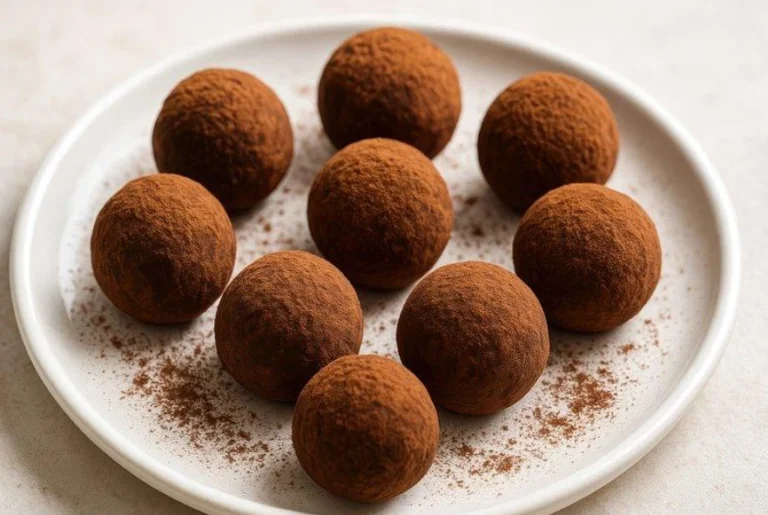
Profiterole Recipe with Chocolate Sauce
Hollow shells, rich cream, and real chocolate sauce
How to Keep Profiterole Shells Puffed
To keep profiteroles puffed instead of collapsing, cook the dough for 2–3 minutes after adding the flour to the boiling water and butter. Once the dough has cooled slightly, add the eggs one at a time, adding the last egg gradually according to the consistency. Do not open the oven during baking; once the shells have colored, reduce the heat to 150°C and bake for 15–20 minutes more to reduce the moisture inside.
- Yield
- 30 profiteroles
- Servings
- 10 servings
- Total time
- 1 hr 45 min
- Difficulty
- Advanced
- Prep time
- 45 min
- Cook time
- 1 hrCooling the Cream and Profiterole Shells: At least 1 hr, ideally 1 hr 30 min
Ingredients for Profiteroles
For the choux pastry
For the cream
For the chocolate sauce
For decorating
How to Make Profiteroles
Enlarges the steps and, on supported browsers, helps keep your screen awake.
-
01
Cook the cream base
15 minutesAdd the milk, egg yolks, sugar, flour, starch and vanilla to a saucepan. With the heat off, whisk until smooth. Cook over medium heat, scraping the bottom constantly, until thickened and bubbling across the surface. Stir for another 1–2 minutes, then remove from the heat.
-
02
Cool and lighten the cream
5 minutes of active workCover the surface of the cooked custard with plastic wrap, pressing it directly against the surface, and leave it to cool. Once the custard has come close to room temperature and then cooled thoroughly, add the heavy cream and powdered whipped topping. Beat with a mixer for 2–3 minutes, until smooth and light, then refrigerate until ready to use.
-
03
Boil the liquid mixture
5 minutesPut the water, butter, salt and sugar in a heavy-bottomed saucepan. Heat over medium heat until the butter has completely melted and the entire mixture begins to boil vigorously.
-
04
Add the flour and cook the dough
3 minutesAdd the flour to the boiling mixture all at once. Reduce the heat and stir rapidly with a spatula or wooden spoon. Once the dough comes together in one piece, cook it while stirring for 2–3 minutes, until a thin film forms on the bottom of the pan.
-
05
Add the eggs gradually
10 minutesTransfer the dough to a wide bowl and stir for a few minutes to release its initial heat. Add the first 3 eggs one at a time, waiting until each is fully incorporated before adding the next. Beat the fourth egg in a separate bowl and add it gradually, checking the dough’s consistency.
-
06
Pipe the dough onto the baking sheet
10 minutesPreheat the oven to 180°C with the fan off and both top and bottom heat on. Transfer the dough to a piping bag and pipe rounds about 3 cm in diameter onto a parchment-lined baking sheet, leaving 3–4 cm between them. Gently smooth any pointed tips with a lightly moistened finger.
-
07
Bake the dough until puffed
25–30 minutesPlace the baking sheet on the middle rack of the fully preheated oven. Bake the dough at 180°C until it has risen noticeably and turned light golden. Do not open the oven door at this stage.
-
08
Dry the shells at a lower temperature
15–20 minutesWithout opening the oven door, reduce the temperature to 150°C. Bake for another 15–20 minutes to reduce the moisture inside the shells. At the end of this time, turn off the oven and keep the door closed for the first 5 minutes. Then leave the door slightly ajar for another 10 minutes, and let the shells cool completely.
-
09
Make the chocolate sauce
5 minutesWhile the profiterole shells cool, heat the heavy cream in a small saucepan without bringing it to a boil. Remove from the heat and add the milk chocolate and dark chocolate. Let it stand for 1 minute, then stir from the center outward until smooth and glossy. Set aside to cool slightly.
-
10
Fill the profiteroles with cream
10 minutesMake a small hole in the side or bottom of the completely cooled shells, or cut them halfway open. Transfer the cold cream to a piping bag and fill each shell with enough cream.
-
11
Add the sauce and decorate
5 minutesTransfer the filled profiteroles to a serving plate and drizzle the lukewarm chocolate sauce over them. Melt the white chocolate and thin it with 1 teaspoon vegetable oil; drizzle it over the dessert in fine lines. Sprinkle with ground pistachios and serve.
Profiteroles
Mastery Guide
Review the technical details, common mistakes and correct practices that determine the recipe result.
Critical Tips
Cook the flour thoroughly
If the dough only comes together after adding the flour, it may remain too moist.
Best practice: Dry the dough for 2–3 minutes, until a thin film forms on the bottom of the pan.
Add the last egg gradually
Egg size and the amount of water the dough loses can vary.
Best practice: Beat the fourth egg and add it gradually until the dough reaches a thick V shape.
Do not open the oven door
Heat and steam can escape before the crust sets, causing the profiteroles to collapse.
Best practice: Keep the door closed until the baking at 180°C and drying at 150°C are complete.
Dry the centers at a low temperature
The centers may remain moist if only the crusts brown.
Best practice: After the first bake, reduce the temperature to 150°C and dry for 15–20 minutes.
Combine the cold cream and shells
Hot components quickly soften the shells and loosen the cream.
Best practice: Cool both the cream and the shells completely before filling.
Common Mistakes
Adding eggs to hot dough
The egg may partially cook, making the dough lumpy.
Best practice: Let the dough cool from its initial heat, then add the eggs.
Adding all the eggs at once
The dough may become too runny and spread on the baking sheet.
Best practice: Add the eggs one at a time, adding the last one gradually.
Placing the dough too close together
The puffs will stick together as they rise, and their sides will not dry properly.
Best practice: Leave at least 3–4 cm of space between them.
Opening the oven door too early
The internal pressure drops quickly, causing the shells to collapse before they set.
Best practice: Do not open the door until baking and drying are complete.
Pouring on sauce that is too hot
Hot sauce can loosen the cream and quickly make the shell soggy.
Best practice: Use the sauce once it is pourable but lukewarm.
Why Does This Happen?
Why does profiterole dough rise?
The water in the choux pastry turns to steam in the oven, while the eggs and flour give the expanded dough enough structure to hold its shape as a shell.
Best practice: Use a fully preheated oven at the start, and do not open the door.
Why is the flour cooked on the stovetop?
The flour’s starch thickens the hot liquid, while brief cooking removes excess moisture and balances the eggs.
Best practice: Once the dough comes together, continue stirring and cooking it for 2–3 minutes.
Why do profiteroles collapse after coming out of the oven?
If the temperature drops before the inside has dried sufficiently, the shells cannot support their own weight.
Best practice: After they rise at 180°C, dry out the inside at 150°C.
Why do filled profiteroles soften?
Moisture from the cream and chocolate sauce gradually transfers to the shells.
Best practice: Fill the profiteroles and, especially, add the sauce close to serving time.
Mayana Tips
Test the dough consistency with a spatula
The number of eggs alone does not guarantee the right consistency.
Best practice: Aim for a consistency that flows slowly from the spatula and forms a thick V shape.
Pipe evenly sized rounds
Shells of different sizes will not bake in the same amount of time.
Best practice: Hold the piping bag straight over the baking sheet and keep the rounds at approximately 3 cm in diameter.
Prepare the shells ahead
Doing every step at the last minute can extend serving time.
Best practice: Bake the shells ahead and let them cool completely; fill them on the day you serve them.
Add the sauce close to serving
Shells that sit under the sauce for too long soften more quickly.
Best practice: For a more distinct shell texture, drizzle the sauce over them close to serving time.
Ingredients & Measurements
Water, butter, and flour balance
1 cup water, 100 g butter, and 1 cup flour form the pâte à choux base for this recipe.
Best practice: Use the measurements as given, and add the flour all at once.
The egg amount depends on the consistency
Four eggs is the upper limit for this recipe; the size of the eggs affects the result.
Best practice: Beat the last egg, then add it gradually.
Use flour and starch together for the pastry cream
The flour provides structure, while the starch creates a smoother, more controlled consistency.
Best practice: Whisk the two thickeners into the cold milk until smooth, then cook the mixture.
Keep the milk chocolate and dark chocolate ratio
60 g milk chocolate and 30 g dark chocolate balance the sauce's sweetness and cocoa intensity.
Best practice: Melt the chocolates in 100 ml hot cream; do not boil the sauce.
Cooking Techniques
Dry the pâte à choux dough
Cooking the flour-based dough briefly on the stove reduces excess moisture and helps control how much egg it absorbs.
Best practice: Stir for 2–3 minutes, until the dough leaves a thin film on the bottom of the pan.
Add the eggs gradually
Incorporating each egg separately creates a smooth emulsion and a controlled consistency.
Best practice: Do not add the next egg until the previous one is fully incorporated.
Bake in two stages
The higher initial heat helps the pastry rise, while the lower second heat reduces moisture inside.
Best practice: First, bake at 180°C to help the pastry rise, then dry it at 150°C for 15–20 minutes.
Prepare the ganache without boiling
Boiling the cream or exposing the chocolate directly to high heat can cause the sauce to split.
Best practice: Heat the cream only. Remove it from the heat, melt the chocolates in it, and stir from the center outward.
How to Store and Make Profiteroles Ahead
- Serving temperature
Serve cold or after letting the profiteroles stand for 5–10 minutes after coming out of the refrigerator; the chocolate sauce may be lukewarm so it remains pourable.
- Best resting time
After filling and saucing the profiteroles, refrigerate them for 20–30 minutes to allow the cream and sauce to settle; a longer rest will soften the shells.
- Refrigerator storage
Store filled profiteroles in a covered container at 0–4°C and eat them within 1 day for best quality, and no more than 2 days.
- Room-temperature limit
Do not leave filled profiteroles containing milk, cream, and eggs at room temperature for more than 2 hours in total. If the room temperature is above 32°C, limit this time to 1 hour.
- Freezing
Filled and sauced profiteroles are not recommended for freezing. Empty, completely cooled shells can be frozen in airtight packaging.
- Thawing method
Remove frozen empty shells from their packaging and thaw them at room temperature; before serving, dry them briefly in a 150°C oven for 5–8 minutes, then cool completely.
- Reheating
Do not reheat cream-filled profiteroles. You can heat only the empty shells in a 150°C oven for 5–8 minutes to restore their crispness.
- Make-ahead steps
The cream and profiterole shells can be prepared separately in advance. Keep the shells dry and covered; store the cream at 0–4°C and fill the shells on the day of serving.
- Serving suggestion
Arrange the profiteroles on a serving plate and drizzle with the lukewarm chocolate sauce. Add the white chocolate drizzles and ground pistachios at the last moment.
Nutrition
1 serving: 3 profiteroles; excluding ground pistachios
A total of 30 profiteroles were divided into 10 servings, with 3 profiteroles per serving. The calculation uses standard manufacturer data and reliable food database averages for 1 liter milk, 4 medium eggs and 2 egg yolks, approximately 160 g sugar, approximately 37 g powdered whipped topping, approximately 100 ml heavy cream for the filling, 100 ml heavy cream for the sauce, the listed chocolates, butter, flour, cornstarch, and 1 teaspoon vegetable oil. Results may vary by brand and spoon measurements. Values are approximate calculations.
Frequently Asked Questions About Profiteroles
Why does profiterole dough collapse after coming out of the oven?
If the shells come out before they are fully dry inside, they cannot support their own weight as they cool. Drying them at 150°C for 15–20 minutes after the initial baking reduces the risk of collapse.
Do all 4 eggs need to be added to profiterole dough?
Not always. Egg size and how thoroughly the dough dried on the stove can vary. Beat the last egg and add it gradually; stop when the dough reaches a thick V-shaped consistency.
When can you open the oven door while profiteroles are baking?
Do not open the door until the rising and drying stage at 150°C is complete. At the end, turn off the oven, wait briefly, then open the door slightly.
Can profiterole cream be made ahead?
Yes. Cool the cream with plastic wrap pressed directly against the surface, then store it covered at 0–4°C. The cream must be completely cold before you fill the profiterole shells.
When should chocolate sauce be poured over profiteroles?
Pour the sauce while it is lukewarm, close to serving time, to help preserve the shells' texture. Very hot sauce can loosen the cream, while waiting too long softens the shells.
How many days can profiteroles be stored in the refrigerator?
Store cream-filled profiteroles in a covered container at 0–4°C; for the best quality, eat them within 1 day and no later than 2 days.
You may also like