
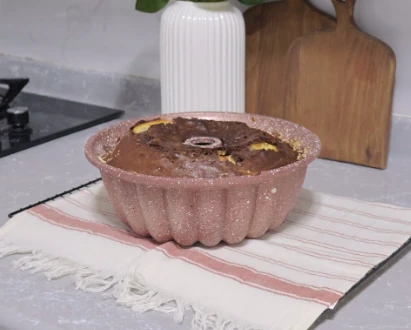
Why Does Cake Rise and Then Collapse?
Diagnose why a cake rises quickly in the oven and then deflates, from excess leavening and high heat to an underbaked center, opening the oven early, and inaccurate measurements.
Quick Answer
When a cake rises and then collapses, the most common cause is that its structure rises with too much gas before it has baked and set. Too much baking powder, an oven that is too hot, excess liquid or sugar in the recipe, opening the oven door too early, and removing the cake before the center is fully baked can all cause this problem. If the outside cooks quickly while the center stays raw, the cake cannot support its own weight after it comes out of the oven.
In This Guide
Key Reasons
- Too much leavening: The batter rises too quickly; the bubbles grow before the structure sets and then collapse.
- Oven temperature too high: The outside browns early, while the cake rises before the center is fully baked and collapses as it cools.
- Opening the oven door too early: The oven temperature drops suddenly, and the partially baked structure can lose its volume.
- Underbaking: The starch and protein structure in the center has not set.
- Incorrect measurements: Too much liquid, sugar, or fat combined with too little flour leaves the batter unable to support the gas it produces.
Proper Application
- Do not increase the amount of baking powder in the recipe.
- Preheat the oven and, unless the recipe says otherwise, use 170–180 °C for most standard cakes.
- Do not open the oven door for the first 20–30 minutes.
- After adding the flour, mix the batter only until evenly combined; do not beat it longer than necessary.
- Test the center with a toothpick toward the end of the baking time. If liquid batter remains on the toothpick, continue baking.
- After removing the cake from the oven, let it rest in the pan for 10–15 minutes, then cool it properly.
Common Mistakes
Adding extra baking powder so the cake will rise more
Why it causes problems: The cake rises quickly, but the structure cannot support this volume and collapses.
Correct use: Use the recipe's tested amount of leavening.
Setting the oven to a higher temperature than necessary
Why it causes problems: The outside looks baked while the center remains raw; the cake collapses inward as it cools.
Correct use: Follow the recipe's temperature and verify the actual temperature with an oven thermometer.
Opening the oven door in the first few minutes
Why it causes problems: A sudden drop in temperature can deflate the partially set cake structure.
Correct use: Keep the door closed for the first 20–30 minutes.
Removing the cake early based only on its top color
Why it causes problems: The center may not be fully baked.
Correct use: Test the center with a toothpick toward the end of the baking time.
Mayana's Recommendation
- Mayana tip: If your cake keeps collapsing in the same spot, first check the oven temperature with an independent thermometer; home ovens may differ from their settings.
- When doubling a recipe, increase the pan size as well. Batter that is too deep in the same pan makes the center take longer to bake.
- Instead of increasing the amount of leavening, correct the egg-whisking, pan size, and steady heat.
Additional Information
A collapsed cake cannot be made to rise again. If the center is still raw, you can return it to the oven at a low temperature, but the texture may not be as even as it was after the first bake. If the collapse is only slight and the inside is fully baked, it usually affects the appearance rather than serving safety.
Frequently Asked Questions
Why does cake deflate after coming out of the oven?
If the cake is removed before the center is fully baked, too much leavening is used, or it rises too quickly at a very high temperature, the inner structure collapses as it cools.
Can too much baking powder make a cake collapse?
Yes. Gas can form too quickly, creating too much volume before the cake structure sets, causing it to collapse afterward.
When Can You Open the Oven While Baking Cake?
It is safe not to open the oven during the first 20–30 minutes; leave checking for doneness until the final stage.
Can a collapsed cake be put back in the oven?
If the center is raw, it can be baked again at a low temperature; however, the collapsed structure will not fully return to its original state.
More cooking information in the Why Does This Happen? category
Access the other explanations, tips, and practical guidance published in the Why Does This Happen? section all in one place.