
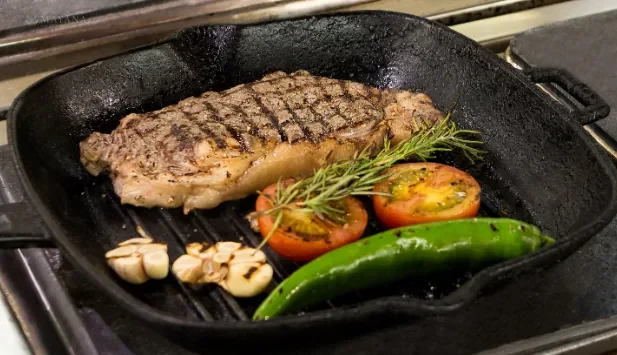
Why You Shouldn’t Overcrowd the Pan When Searing Meat
Adding too much meat to the pan quickly lowers the heat, increases steam, and makes the meat cook in its own juices instead of browning. Learn how to portion it correctly
Quick Answer
When too much meat goes into the pan at once, the temperature drops quickly and moisture released from the meat cannot escape fast enough. The resulting steam makes the surface cook in its own juices instead of browning. The meat may end up pale, without a brown crust on the outside, and tougher than expected.
In This Guide
Key Reasons
-
The pan’s temperature drops suddenly
When a large amount of cold or cool meat is added, the pan cannot maintain its high surface temperature. It takes time to regain the heat needed to brown the meat.
-
Excess moisture builds up in the pan
Meat naturally releases some water as it cooks. When the pieces are too close together, that moisture cannot evaporate and escape easily.
-
Steaming begins instead of browning
With water present, the meat’s surface struggles to reach the high temperature needed for strong browning. As a result, no distinct brown layer forms on the outside.
-
The cooking time increases
The water collected in the pan must evaporate first. Meanwhile, the meat continues cooking, so the inside may become overcooked before the outside browns sufficiently.
-
The pieces do not heat evenly
Some surfaces of overlapping or tightly packed pieces do not make direct contact with the pan. This creates uneven color and differences in doneness.
Proper Application
-
Pat the meat dry. Before placing it in the pan, use a paper towel to remove excess moisture from the surface. A wet surface must lose its water to steam before browning can begin.
-
Heat the pan before adding the meat. The pan should be hot enough, especially when cooking diced meat, steak, or chops. A clear sizzling sound when the meat touches the pan is one sign that the surface is ready to brown.
-
Arrange the meat in a single layer. The pieces should not overlap, and each piece should make direct contact with the pan. Leave visible gaps between them so steam can escape.
-
Cook in batches if needed. If all the meat does not fit comfortably in the pan, divide it into two or three groups. Before adding each new batch, allow the pan a short time to heat up again.
-
Do not stir constantly as soon as you add the meat. The pieces need to stay in contact with the pan long enough. Turn or stir the meat after the underside has browned.
-
Set the cooked batches aside on a separate plate. Once all the meat has browned, return it to the pan and cook it briefly with sauce, vegetables, or spices. This preserves the browned surface and allows the ingredients to combine evenly.
Common Mistakes
Adding all the meat to a small pan at once
Why it causes problems: Too much meat lowers the pan’s temperature and prevents the released water from evaporating quickly.
Correct use: Use a wider pan or cook the meat in several batches.
Placing the pieces on top of one another or packed tightly together
Why it causes problems: Surfaces that do not touch the pan will not brown, and steam builds up between the pieces.
Correct use: Arrange the meat in a single layer, leaving space between the pieces.
Putting meat straight from the refrigerator into a cold pan
Why it causes problems: Because both the pan and the meat are at a low temperature, browning is delayed and water collects in the pan.
Correct use: Heat the pan properly first and remove excess moisture from the meat’s surface.
Immediately lowering the heat when the meat releases liquid
Why it causes problems: Low heat makes the water collected in the pan evaporate more slowly and causes the meat to cook in the liquid for longer.
Correct use: Temporarily remove the meat from the pan and wait for the liquid to reduce and the pan to heat up again.
Turning and stirring the meat constantly
Why it causes problems: The same surface of the meat does not stay in contact with the pan long enough, so distinct browning does not develop.
Correct use: Leave the meat as undisturbed as possible until one surface has browned.
Mayana's Recommendation
Arrange the pieces in a single layer with space between them.
The size of the pan determines how many pieces of meat can be cooked; there is no fixed amount that works for every pan. Once the meat starts to feel crowded, use a larger pan or divide it into batches. That is the key difference between browning and cooking in its own juices.
Additional Information
-
Overcrowding the pan is not equally problematic for every meat dish. If the goal is to brown the meat first or develop color on the outside, the pieces must be cooked in batches. For stews and other pot dishes where the meat will cook in liquid for a long time, all the pieces can be combined in the same pot after the browning stage is complete.
-
Contrary to popular belief, browning meat in a pan does not lock all its juices inside. The process mainly creates color, aroma, and new flavor compounds on the meat’s surface.
More kitchen tips in the Common Mistakes category
Access the other explanations, tips and practical guidance published in the Common Mistakes section from a single screen.